

Opening: A lab morning, numbers, and a question
I once arrived at a small Kathmandu lab to find a fermenter alarm blinking and a technician worried about drop in titer — a scenario I know too well after over 15 years supplying cell culture consumables. In that first hour I checked the recent lot of cho cell culture media used in the run and saw variability on the certificate of analysis (CoA), (small things that add up, dai). The data showed a 22% decline in recombinant protein yield compared with the previous batch. What had gone wrong: the media, the feed strategy, or simply poor lot control? This is where most teams pause and point fingers at the bioreactor settings, yet the root often lives in the media itself. I will walk you through what I learned from that morning — clear, direct observations and practical fixes — and then move into deeper faults under the surface.
Part 2 — Deeper faults: where traditional solutions fail
What’s the real trouble?
When I review failing runs, the typical culprit is not an elegant failure mode; it’s cumulative small mismatches. We used a commonly stocked serum-free blend and a standard glutamine supplement in a fed-batch CHO run in July 2019 at a contract facility near Lalitpur. The batch-to-batch variation increased after a supplier change, and titers dropped by about 18% over three runs. This is where cho cell culture media quality matters most. Traditional fixes — adding more feed, extending culture time — often mask the symptom but do not fix raw media inconsistency. I have seen teams waste 2–3 weeks and extra single-use bags chasing the wrong variable.
Technically, issues tend to cluster around three items: (1) inconsistent amino acid stability (glutamine degradation), (2) lot variability in basal salts and trace metals, and (3) undetected osmolarity shifts after supplement mixing. In one case in November 2018 we replaced a feed supplement and got a sudden 30% rise in lactate — a clear sign of metabolic shift and poor adaptation. Look, the fix is not always a new protocol; sometimes it means better CoA checks and a short adaptive pass for the cell line. I prefer stepwise validation: run a 7-day mini-bioreactor screen, compare peak viable cell density and specific productivity, then sign off. Those concrete steps saved a Kathmandu research customer roughly USD 6,500 in wasted consumables that quarter — not trivial.
Part 3 — Forward-looking choices and how to evaluate suppliers
What’s next for media strategy?
Moving forward, I advise a mix of practical checks and strategic questions when choosing or qualifying cho cell culture media. In early 2021 my team ran a side-by-side comparison of three chemically defined media types across two CHO cell lines (CHO-K1 and CHO-S) in 50 mL shake flasks and a 5 L bench bioreactor. The most reliable formulation reduced run-to-run titer variance from 14% to 5% and raised average titer by about 12% after minor feed adjustments. You’ll want similar hands-on trials; nothing replaces an in-house mini-screen. — unexpected at first, but it clarifies decisions quickly.
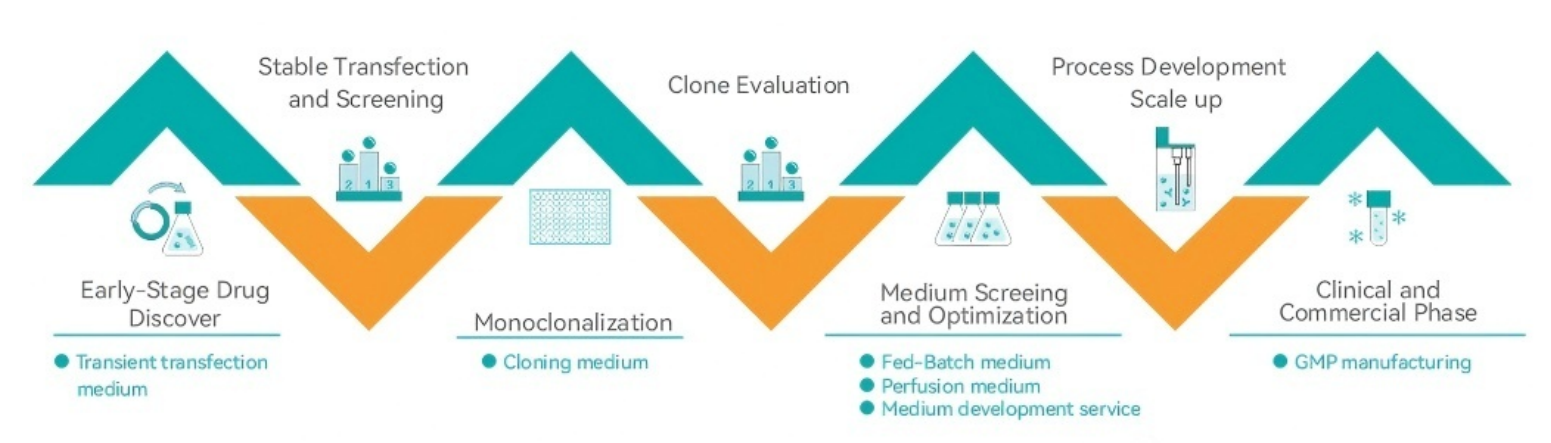
For practical selection I use three metrics every time: (1) lot-to-lot analytical consistency (osmolarity, pH after supplementation, amino acid profile), (2) adaptability support (how many passages required for your specific cell line to stabilize), and (3) measurable impact on process outputs (titer, viability at harvest, metabolites like lactate). Those are the three evaluation metrics I recommend to any procurement or QC team. If a vendor cannot provide clear CoAs and a simple sample trial, we walk away. Finally, remember scalability: performance in a 125 mL shake does not always translate to a 200 L bioreactor; ask for scale-up case notes or supporting data. I have worked with small labs in Patan and contract manufacturers in Pokhara — the right media choice saved one client there nearly two months of development time and improved product consistency markedly.
In closing, I speak from hands-on experience rather than theory. Over 15 years in B2B supply for cell culture, I have learned to trust data first and assumptions second. Choose media with transparent analytics, run short adaptation screens, and track simple metrics (osmolarity drift, specific productivity, and cell-line adaptation days). These actions yield measurable improvements. For reliable supply and technical support, consider partners who provide both samples and documented performance; I often point customers to vetted suppliers and technical resources such as ExCellBio when they need consistent follow-through.