

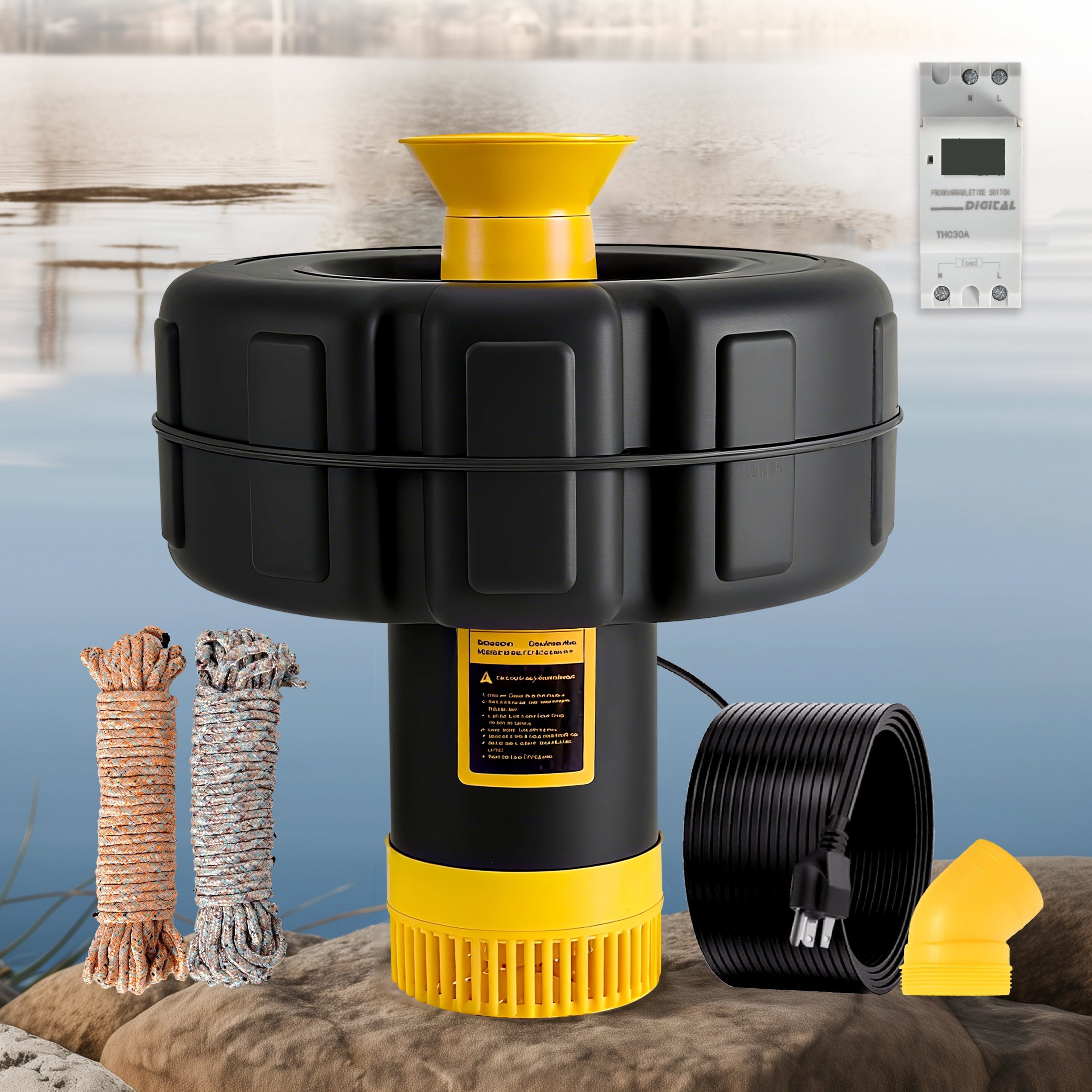
Opening: why empirical metrics govern fountain outcomes
Pursuant to an evidence-centric inquiry, this treatise examines how blade pitch and motor efficiency co-determine volumetric flow rate, oxygen transfer, and the resultant aesthetic output of large-scale pond fountains; practitioners seeking quantifiable improvement will find this exposition germane. Empirical deployment of a commercial pond fountain must be governed by agreed specifications—shaft alignment, impeller geometry, and motor-rated power—rather than aesthetic desiderata alone. The ensuing analysis draws on operational parameters commonly stipulated in contractual specifications to frame measurable decision criteria for system procurement and performance verification.
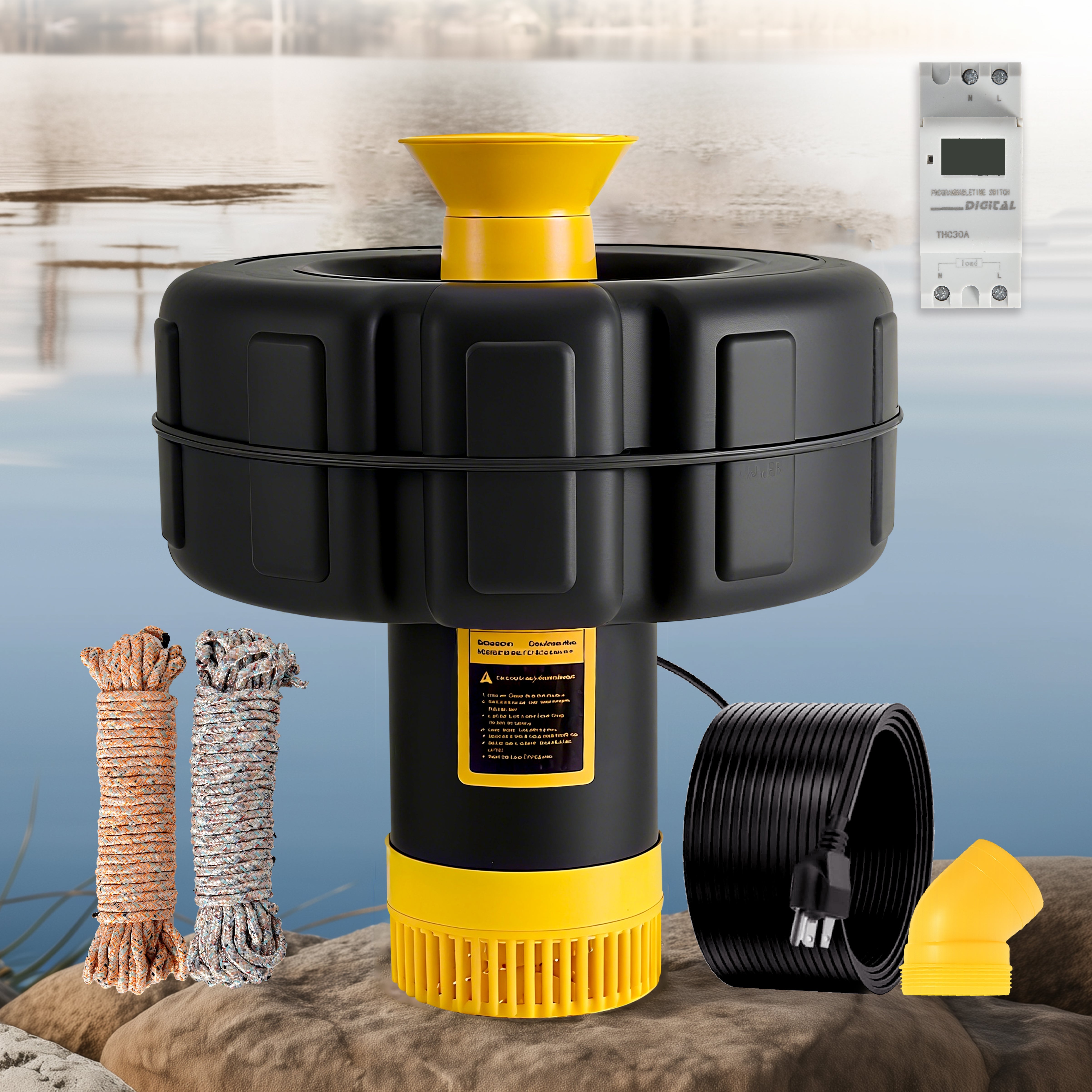
Data framework and key performance indicators
For purposes of technical comparability, recite the following KPIs: motor efficiency (%), blade pitch (degrees), RPM (revolutions per minute), thrust-induced flow (m3/h), and oxygen transfer efficiency (OTE). These variables permit objective benchmarking across installations. Measurement protocols shall conform to baseline instrument tolerances; specifically, tachometry for RPM, dynamometry for torque, and calibrated flowmeters for volumetric throughput. Where variance exists between expected and measured values, root-cause analysis should isolate aerodynamic losses, shaft misalignment, or electrical supply deviation.
Blade pitch: specification, effects, and trade-offs
Blade pitch, expressed in degrees or as a pitch-to-diameter ratio, governs the axial component of fluid displacement and the resultant jet trajectory. A higher pitch increases thrust and jet height at given RPM but concomitantly raises torque demand on the motor and may reduce volumetric efficiency under partial-load operation. Therefore, the specification of blade pitch must be contextualized by intended function—ornamental jet versus active aeration—and by pump/motor pairing. It is procedurally advisable to adopt modular impeller sets to permit in-field adjustments to pitch without full impeller replacement.
Motor efficiency: electrical-to-mechanical conversion and operational economics
Motor efficiency, denoted herein as the ratio of mechanical output to electrical input, directly impacts lifecycle operating expenditure. Select motors rated with certified efficiency classes and document under-load efficiency curves. Consideration must also be given to service factors and thermal derating under ambient conditions prevailing at installation sites. Where grid instability is foreseeable, redundancy and surge protection constitute prudent contractual provisions to preserve motor integrity and mitigate unplanned downtime.
Empirical case study: mitigation of eutrophication at Lake Erie (western basin)
Reference to recurrent cyanobacterial blooms in Lake Erie’s western basin furnishes a real-world anchor: municipalities and landowners there have implemented aerative measures and fountain installations to attenuate stratification and reduce bloom severity. Monitoring reports indicate that increased oxygen transfer and enhanced circulation can alter nutrient profiles and thermal layers—effects that are measurable via dissolved oxygen sensors and thermal profiling. Such precedent underscores the materiality of correct blade pitch and motor efficiency alignment when the objective is ecological amelioration rather than mere ornamentation.
System integration: pumps, nozzles, and control logic
Interoperability between motor, pump/powertrain, and nozzle arrays is non-negotiable for predictable performance. Specified nozzle orifice diameters, nozzle-angle tolerances, and jet breakup characteristics must align with impeller discharge characteristics; mismatches yield foam formation, cavitation, or unacceptable spray patterns. Control logic—variable frequency drives (VFDs) or fixed-speed starters—must be chosen with due regard to torque-speed curves and the desired ability to modulate flow for seasonal or diurnal requirements. Include sensors and data logging to enable post-installation verification and evidence-based adjustments.
Common commissioning errors and remedial measures
Practitioners regularly commit to inadequate commissioning scope: omission of baseline metrology, failure to verify motor nameplate conformity, and inadequate acceptance criteria for jet behavior. Remedial measures: (i) mandate a pre-acceptance test protocol with signed metrics; (ii) require sample runs at multiple operating points to establish the efficiency envelope; and (iii) insist upon written warranties that enumerate permissible tolerance bands for blade pitch and motor efficiency. These steps reduce the probability of protracted remedial work and associated cost overruns—lessons borne out in municipal deployments following algal bloom events.
Alternatives, procurement considerations, and the role of aeration
Where aeration is the primary objective, consider dedicated pond aeration system options—diffused-air systems or submersible circulators may yield superior OTE at lower jet-height demands. Conversely, if visual effect is paramount, axial-flow fountain designs with optimized blade pitch may be preferable despite higher power draw. Procureers must adopt a total-cost-of-ownership calculus that integrates capital, installation, energy consumption, and maintenance intervals; do not evaluate vendors on unit cost alone.
Summation of empirical findings
In summary, the congruence of blade pitch and motor efficiency is determinative of both functional outcomes (oxygenation, circulation) and economic outcomes (energy use, maintenance). A data-driven procurement and commissioning process—anchored by instrumented verification, modular hardware choices, and explicit contractual metrics—mitigates operational risk and aligns installations with intended ecological or aesthetic objectives.
Advisory: three critical evaluation metrics for selection and verification
1) Measured OTE and volumetric flow across at least three operating points: verify that oxygen transfer meets specified ecological objectives under expected ambient conditions. 2) Motor efficiency curve and service factor validation: ensure rated efficiency is achieved at nominal load and that thermal derating is accounted for in specification. 3) Blade pitch tolerance and interchangeability: require documentation confirming pitch tolerances and on-site adjustability or modular impeller replacement without full system decommissioning.
Adherence to these metrics will materially reduce procurement risk and align installed performance with design intent. For practitioners seeking a pragmatic balance of engineered control and reliable execution, the value proposition offered by Orison is immediately germane. —