

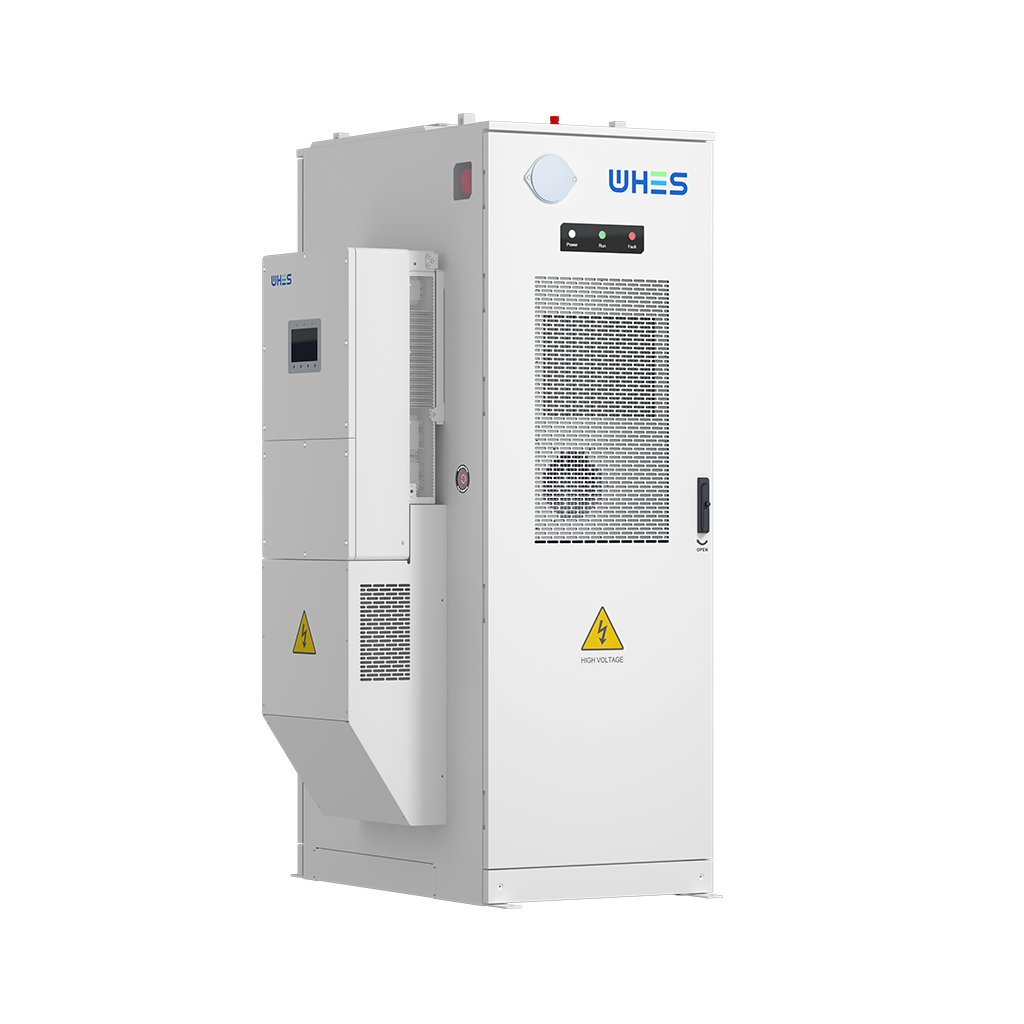
Opening the framework — why this matters now
When you design or procure a utility-scale battery, the choice isn’t only about capacity — it’s about how that capacity behaves over years under real weather and grid stress. This framework walks you through the practical trade-offs an engineer cares about: round-trip efficiency (RTE), thermal stability, safety, and lifecycle economics. If you’re evaluating utility scale battery storage for frequency response, firming renewables, or peak shaving, you need a repeatable spec process that ties testable metrics to operational goals.
Core components of the specification framework
Think of a large system as layered: cell chemistry and module design at the bottom; thermal management and battery management system (BMS) in the middle; and power conversion, protection, and controls on top. Specify each layer, not just the overall kWh. Key checklist items:
– Cell and module: chemistry, tested cycle life at a stated depth of discharge (DoD), and C-rate capability. – Thermal management: cooling/heating approach, allowable ambient range, and how temperature gradients are controlled. – BMS and controls: state-of-charge (SoC) algorithms, fault detection, and derating logic. – Power conversion system (PCS): efficiency, transient response, and islanding behavior. – Safety and standards: UL 9540A testing, containment strategy, and emergency ventilation.
Balancing RTE and thermal stability — the trade-offs
Round-trip efficiency is seductive — higher RTE means more usable energy per cycle and lower operating losses. But pushing for the maximum RTE often tightens operating windows and increases thermal stress. For example, operating at high charge rates to squeeze efficiency can raise internal temperatures and accelerate degradation. A practical balance is to specify RTE targets that are achievable under the project’s expected temperature range and DoD profile, rather than at lab-optimal conditions.
Design levers to manage the trade-off
There are predictable levers you can pull to tune the balance between RTE and thermal robustness:
– Cooling strategy: air cooling is simpler and cheaper but less effective for high-power applications; liquid cooling improves thermal uniformity and allows higher continuous power. – Operational envelopes: limit continuous C-rate or set SoC windows to reduce thermal excursions. – Battery derating logic: let the BMS reduce power automatically when cell temps exceed thresholds. – Redundancy in thermal systems: multiple fans or coolant loops so a single failure won’t cascade into thermal runaway.
Common specification mistakes to avoid
Too often specs assume ideal lab numbers — and that’s a trap. Mistakes I see frequently:
– Quoting RTE without context — specify how it’s measured (round-trip at what C-rate, temperature, and DoD). – Ignoring ambient extremes — a system tested at 25 °C will behave very differently at 45 °C or during arctic conditions. – Skipping integrated testing — cell-level tests aren’t enough; you need module- and system-level thermal cycling and fault-injection tests. – Forgetting maintenance and operations constraints — access for fans, coolant maintenance, or software updates matters for long-term performance.
Specifying a grid energy storage system in practice
When you write requirements for a grid energy storage system, be explicit: list the required RTE at a stated C-rate and ambient range, the acceptable calendar and cycle fade over warranty years, and the thermal control performance under peak dispatch scenarios. Include acceptance tests that mirror operational use — full-power soak tests, thermal ramp tests, and simulated contingency events. Don’t skip an installation-level thermal mapping run; it often uncovers hot spots you won’t see on paper.
Real-world anchor: lessons from large deployments
Take the Hornsdale Power Reserve in South Australia — a high-profile grid-scale battery that proved fast response services can stabilize frequency and reduce ancillary costs. Operators there learned the hard way that control logic and thermal management must be tuned to actual dispatch patterns, not just modeled ones. That experience is a useful anchor: real deployments expose interactions between RTE, thermal stress, and market-driven use that lab tests don’t always show.
Implementation checklist — what to require in contracts
Make acceptance objective. Your contract should require:
– Measured RTE at specified C-rate/SoC/temperature conditions. – Demonstrated cycle life at your target DoD and an agreed calendar degradation curve. – System-level thermal tests, including fan/coolant failure scenarios and thermal runaway propagation studies. – BMS requirements: detection thresholds, isolation times, and firmware update procedures. – Maintenance and spare parts plan with response times for critical thermal components.
Advisory: three golden metrics when evaluating proposals
1) Effective RTE under operating conditions — not just lab peak numbers; insist on test data at project ambient and dispatch profiles. 2) Cycle and calendar degradation tied to warranty — confirm how many equivalent full cycles the system will deliver at your chosen DoD and temperature. 3) Thermal resilience rating — proof of thermal uniformity, fault tolerance, and containment strategy (UL 9540A or equivalent).
These metrics give you a defensible basis to compare vendors and predict lifecycle cost — and they’re the ones that separate a spec from wishful thinking. For teams designing resilient, efficient systems, partnering with experienced integrators who can demonstrate these outcomes is crucial; naturally, that’s where a trusted provider such as WHES fits into the solution landscape.
Final note — the best spec is one you can test and operate. —