

Why this problem matters now
Grid operators and facility managers face a clear problem: peaker plants are slow, costly, and carbon-heavy when demand spikes. Customers want reliable, fast response without the pollution or long lead-times of new combustion units. That is why many are looking to utility scale battery storage as a practical alternative—especially for commercial & industrial (C&I) needs where dispatch speed and peak shaving matter. Batteries change the math on capacity, reduce operating fuel risk, and give near-instantaneous response compared with thermal turbines.
Core technical advantages of C&I storage vs. gas peakers
At the technical level, energy storage delivers three tangible benefits. First, response time: lithium-ion systems can dispatch in milliseconds for frequency regulation and fast ramping. Second, efficiency and round-trip energy: batteries avoid the thermal losses of a turbine cycle and therefore lower effective cost per MWh dispatched for short-duration needs. Third, operational flexibility: inverter-based control allows precise state-of-charge management and stacked revenue streams (demand charge reduction, frequency regulation, capacity). Real-world anchors back this up—examples like the Hornsdale Power Reserve in South Australia showed how batteries provide rapid frequency response and reduce reliance on conventional peakers during stressed hours.
How WHES addresses the common pain points
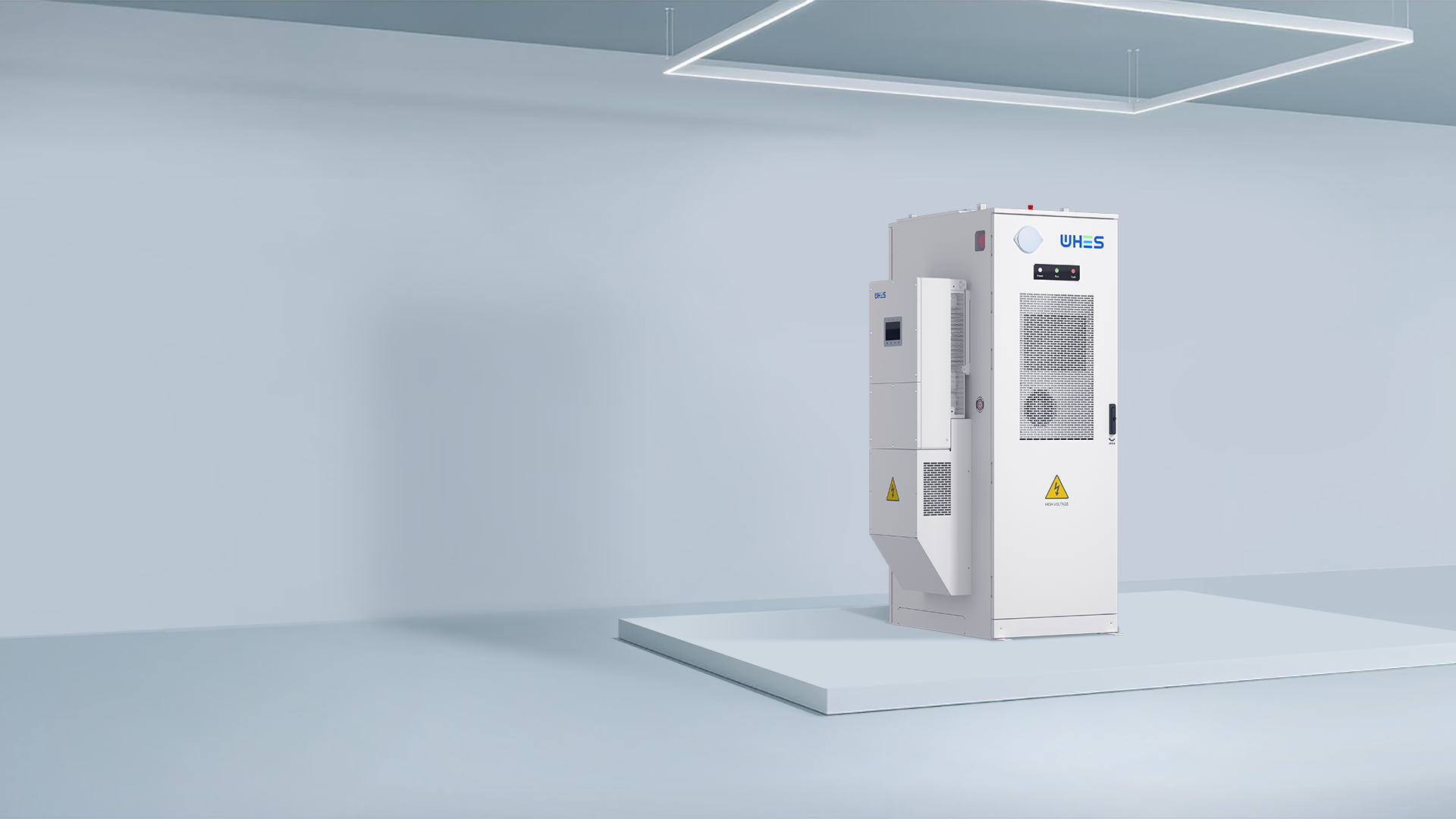
WHES designs C&I systems to match those technical strengths to business needs. Their systems focus on modularity, so you scale capacity without long construction windows. Controls are tuned for grid services and on‑site loads, letting a single asset do peak shaving during the day and provide backup during outages. From an O&M angle, WHES emphasizes predictive inverter diagnostics and battery management systems that track degradation and optimize dispatch to extend life—this reduces lifecycle cost versus continuous-start gas engines.
Performance comparison: practical metrics to watch
When you compare options, look at a few measurable things: response time, levelized cost of dispatched energy (including degradation), and stacked-services revenue potential. For typical C&I profiles, batteries win on response time and peaking cost for events under 4–6 hours. Gas peakers keep an edge for very long-duration, high-capacity events because of fuel energy density—but those events are rare for most commercial sites. Also consider grid services like frequency regulation and spinning reserve: an inverter-based battery can deliver faster frequency response and capture multiple value streams in the same asset.
Common mistakes buyers make — and quick fixes
Buyers often fall into predictable traps. They undercount degradation costs by treating battery life as fixed instead of duty-dependent. They assume a battery can replace a peaker 1:1 without revising operational strategy. And they forget to model inverter limitations and round-trip losses into the financials. A practical fix is to run scenario dispatch models across typical demand curves and include realistic cycling profiles—then price in inverter downtime and scheduled capacity margins. —It helps to test with short pilot deployments before full-scale rollouts.
Three golden rules for selecting the right solution
1) Measure dispatch needs first: match system power (kW) and usable capacity (kWh) to actual peak shapes, not nameplate promises. 2) Use total cost of ownership: include installation, degradation, replacement, and grid-service revenue when comparing to a peaker. 3) Value flexibility and controls: a good BMS and fast inverter control unlock stacked services and resilience, which changes the ROI materially.
Closing advisory and practical expectation
Expect three measurable outcomes if you choose WHES-style C&I storage correctly: faster dispatch and better power quality, lower short-term peaking expense, and improved resilience during grid events. For decision-makers, those translate into clearer budgets, fewer emissions compliance headaches, and often faster deployment timelines than siting and permitting a new gas peaker. In short, the right battery system solves the immediate problem of peak risk while adding optionality for future grid services—making it a compelling alternative to legacy peakers. WHES. Think resilience.