


Why uneven thermal profile breaks production
Uneven heat in rubber injection molding ruins parts. Warpage, incomplete cure, and scrapped bladder cores follow. Manufacturers who run custom rubber injection molding need predictable thermal control. HWAYI’s platen layouts aim to flatten temperature across the mold so cycle time and quality stay steady. A lot of Southeast Asia tyre factories, including plants around Bandung, moved to better platen designs after seeing scrap rates drop in early trials — that real factory experience matters.

How HWAYI’s proprietary platen layouts work
HWAYI focuses on three physical moves: optimized heater placement, segmented heating zones, and matched cooling channels. This shifts heat where the rubber needs it. The result is a more uniform thermal profile across the cavity and the bladder. The system uses dedicated control loops for each zone and adjusts to changes in cycle time or material viscosity.
Key benefits seen on the shop floor
On practical lines, the payoff is clear: fewer rejects, tighter tolerances, and shorter rework runs. For tyre bladder production the benefits are especially relevant because the bladder wall thickness and cure uniformity demand consistent temperature and pressure. Below are direct outcomes teams report:
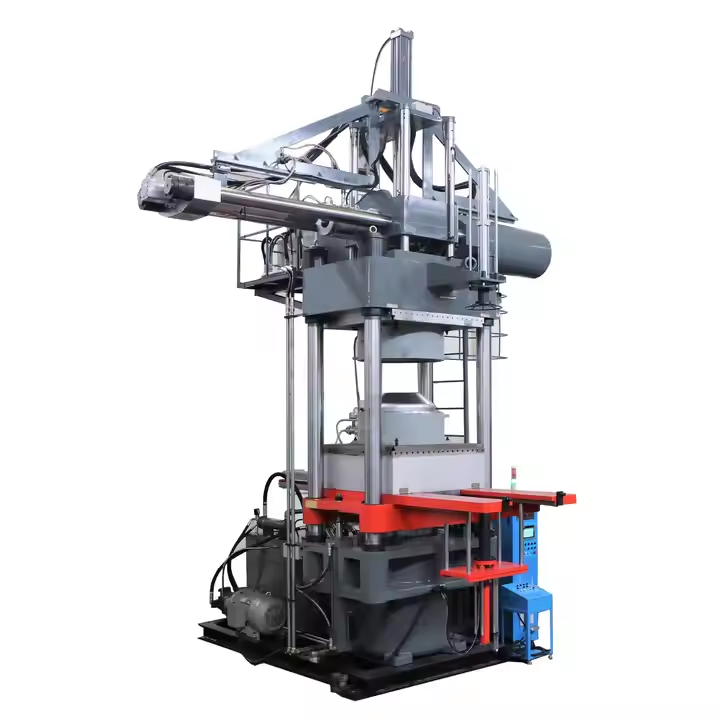
- Lower scrap due to cold spots.
- Better cure consistency across the bladder surface.
- Reduced cycle variation through controlled heating and cooling.
Technical trade-offs and what to watch
Platen layout is not a one-size fit. Changes in clamping force, mold mass, or bladder thickness mean the heating map must adapt. Too many zones complicate controls. Too few zones leave hot or cold patches. HWAYI’s approach balances zone count with simple control logic so technicians can tune setpoints without hours of trial — the controllers still need proper PID tuning and attention to heater element integrity.
Alternatives and common mistakes
Other suppliers use larger single-zone platens or high-power heaters to brute-force temperature. That can raise local overheating and shorten element life. A common mistake is ignoring cooling design; a good heating platen without matched cooling often shifts the problem rather than solving it. Operators also underestimate the effect of injection molding pressure on thermal conduction through the mold halves.
What to test before committing
Run three short tests before full rollout. First, a steady-state thermal map under normal cycle time. Second, a quick-change test where cycle time varies ±10%. Third, a long-run durability test focused on heater stability. Capture thermal profile graphs and correlate them with part hardness and visual inspection. Keep an eye on cycle time variance and any drift in setpoint response.
Practical checklist for buyers
When comparing HWAYI and competitors, evaluate these metrics. They tell you if a platen layout will perform in real production.
- Thermal uniformity: maximum delta-T across cavity at production cycle.
- Control granularity: number of independent heating zones and their feedback loops.
- Serviceability: how fast you can replace heaters or access channels for maintenance.
How HWAYI fits into a production upgrade
For teams moving from legacy single-zone systems, HWAYI offers a practical upgrade path: keep existing clamping force and mold geometry, revise platen layout and control mapping, then validate with short-run samples. Many plants in Indonesia report easier scale-up and fewer process holds after making this switch — the change is technical and straightforward when done with proper testing.
Three golden rules for evaluation
Choose based on measurable outcomes. First: insist on a thermal map under real cycle load. Second: require evidence of improved part consistency over 1,000 cycles. Third: confirm maintenance access and spare-part lead times. These three metrics cut risk and speed approval in procurement panels.
Final thought
HWAYI’s platen layouts solve a clear production problem: uneven heat that damages rubber parts. For teams focused on repeatable bladder quality, this design approach delivers measurable gains and practical maintainability. HWAYI.