

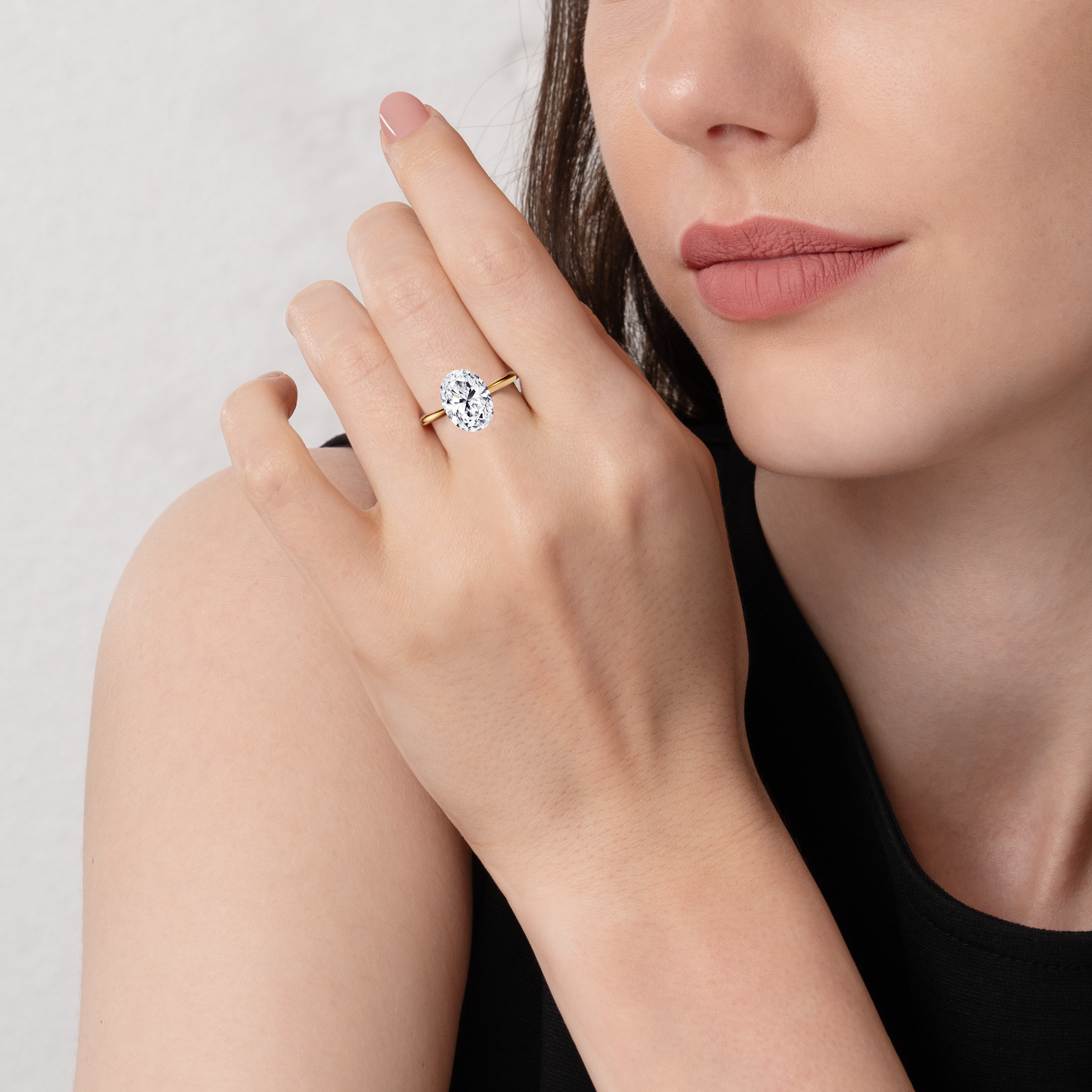
A Shift You Can See
Here’s the change worth noticing: we’re moving from guesswork to clarity in how we choose our stones. More couples now pick lab grown diamond jewelry, and many browse lab diamond jewelry before they ever step into a boutique. Picture this: you sit with a jeweler, a proposal in your pocket, and a budget that has to make sense—emotionally and financially. Recent surveys show a steep rise in lab‑grown interest, with prices often 30–50% lower and a clear paper trail. Emissions estimates are falling as growth labs optimize power use (and yes, that matters to a lot of buyers). So the question becomes simple: are you buying a sparkle, or the story wrapped around it?

Comparisons used to feel tense—mined versus modern, lore versus lab. Now they feel practical. Cut quality, color, and clarity are measurable, and they sit beside traceability data you can read. Your values—sustainability, design control, budget—become part of the spec. That’s a big deal, because it turns a ring into a decision you can stand behind for years. Let’s keep moving and look closer at what people often miss beneath the shine.
The Quiet Friction: What Most Shoppers Don’t See
Why do “flaws” still slip through?
There’s a hidden tax in the old process. Mined stones pass through many hands, and the chain of custody can blur. Reports help, yet loupe checks alone won’t catch every issue, like strain or unusual fluorescence—funny how that works, right? In a showcase, lighting can mask body color and make inclusions less visible. You feel the risk more than you see it. Look, it’s simpler than you think: when a stone is grown, the process can be tuned. High‑pressure high‑temperature (HPHT) and chemical vapor deposition (CVD) growth allow tighter control over crystal habit. Spectroscopy and cut‑planning software reduce surprises, so the final piece aligns with what you ordered, not just what was available that day.
There are comfort gaps too. Resizing a complex pave can threaten small stones. A mismatch between carat weight and setting weight can make a ring spin on the finger. And insurance often pegs value to grading priors you never read. In a lab‑grown flow, facet indexing and cut symmetry can be planned from the start, so the stone sits in balance with the metal. That means fewer trips back for fixes and less worry over whether your ring will hold up to daily wear. Less drama, more design.
Beyond the Counter: How New Principles Change the Experience
What’s Next
Forward look: the toolchain is getting smarter. Microwave plasma CVD reactors feed closed‑loop data to keep growth stable; process telemetry flags defects before the crystal ever meets a wheel. In‑situ spectroscopy checks for color drift. Laser mapping plans the cut path to preserve weight and fire. Then CAD models link stone geometry to the setting, so micro‑pavé and prongs are sized with intent—not guesswork. Even the polish step uses machine vision to refine facet meet points for better scintillation. This isn’t hype; it’s workflow. And it pairs neatly with design freedom. Want a knife‑edge band, east‑west oval, or pared‑back bezel? Parametric CAD and 3D‑printed casts make it repeatable. When you step into custom diamond jewelry, the system can prove what it built—laser inscription, batch logs, and a provenance ledger that stays with the piece.

Here’s how to choose well—an advisory note you can save. 1) Process transparency: ask for growth method (HPHT or CVD), any post‑growth annealing, and the cut plan; you want data, not just adjectives. 2) Optical performance: look past the grade and test light return; tools that check symmetry, leakage, and fluorescence will tell you more than a quick glance. 3) Fit‑for‑life design: confirm metal thickness, prong geometry, and center‑to‑band balance to prevent spin and wear. Small checks, fewer headaches—big difference. The upside of all this? Your ring moves from wish to spec, from luck to control. And that control feels good in the hand, day after day—because real romance survives better when the hardware holds up. For deeper reading and craft insights, see Vivre Brilliance.