

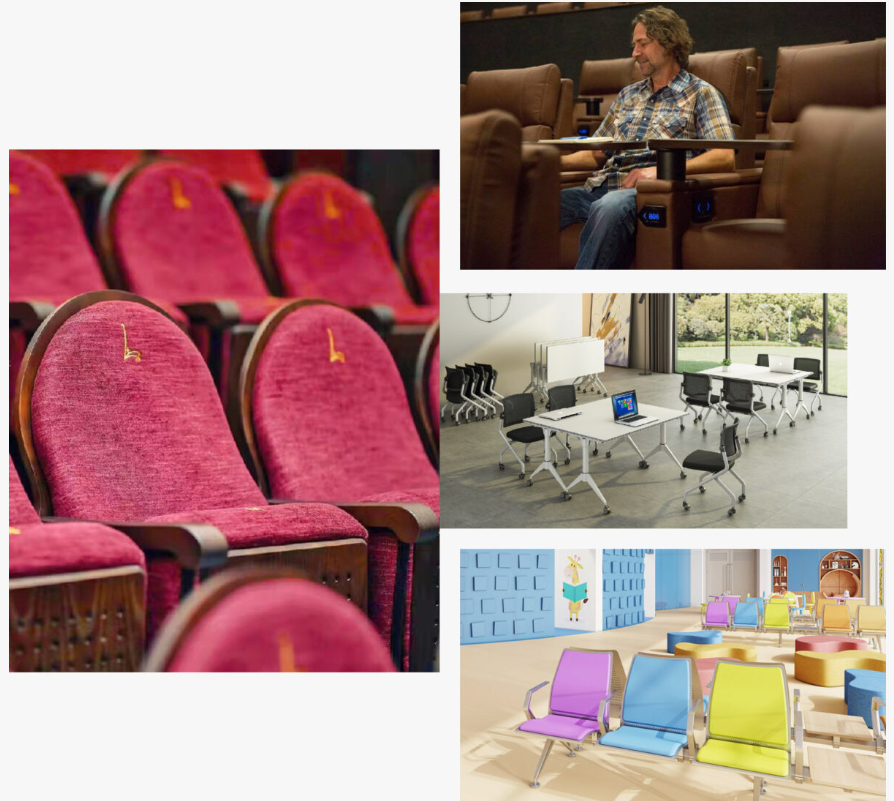
A user-centred approach to commercial seating
When a venue commits to comfort, it must place the user first. That means thinking beyond aesthetics to consider circulation, visibility and long-term comfort — and starting early with product choices such as theatre seating. A user-centric brief balances seat pitch and sightline with programme needs: whether the room hosts lectures, film screenings or live performance will change acceptable rake and aisle arrangements. Clear, measurable criteria make design decisions objective and repeatable.
Primary user needs
Users typically prioritise three things: comfort during the event, easy access, and an unobstructed view. Translate those into project requirements:
- Comfort: adequate legroom and ergonomic contouring for long sessions.
- Access: aisle width and exit routes that match expected turnover and audience profiles.
- Visibility: sightline geometry that ensures every patron can see the stage without craning.
These items should be quantified early, then tested with mock-ups or digital sightline studies to avoid late-stage compromise.
Design trade-offs and engineering constraints
Every choice affects another. Increasing seat pitch improves legroom but reduces capacity. Steeper rake can enhance sightlines but raises accessibility and evacuation considerations. Architects and technical teams must coordinate on sightline calculations and stage sight cones. Practical theatre seating dimensions — from seat width to row spacing — become the rules that govern these trade-offs; use them as constraints rather than afterthoughts.
Common mistakes and how to avoid them
Projects often fail when designers guess user behaviour instead of measuring it. Common errors include over-relying on narrow seat widths to hit capacity targets, underspecifying anchorage for high-traffic aisles, and selecting upholstery that wears poorly under heavy use. Mitigation is straightforward:
- Run a small-scale prototype row to validate comfort and sightline assumptions.
- Prioritise durable upholstery and test abrasion resistance against expected footfall.
- Specify anchorage and mounting systems early, so flooring and finishes are coordinated.
Small user trials expose issues that drawings conceal — and they are inexpensive relative to rework after installation. — A quick test often saves weeks of delay.
Real-world anchor: lessons from Broadway-scale venues
Large theatre districts like Broadway house auditoria ranging from roughly 500 to 1,800 seats; those venues balance intimacy and scale by refining pitch, rake and aisle layout over decades of renovations. Their iterative improvements show that modest increases in legroom and targeted sightline corrections produce measurable gains in audience satisfaction and repeat attendance. When possible, study comparable houses and documented seating plans to set realistic benchmarks for capacity and comfort.
Selecting a supplier and measuring results
Choose vendors that supply detailed technical packages: precise theatre seating dimensions, materials data and anchorage specifications. Request references from similar projects and insist on warranty terms tied to real wear metrics. Measure success with user-centred KPIs rather than seat count alone: dwell-time satisfaction, ingress/egress time per 100 patrons, and maintenance intervals. These indicators translate design intent into operational outcomes and guide future procurement decisions.
Three golden rules for user-focused seating decisions
1) Prioritise sightlines and minimum usable legroom over marginal gains in capacity — the audience notices comfort instantly. 2) Require detailed installation specs (anchorage, mounting patterns, weight loads) before final finishes are fixed; this prevents costly rework. 3) Test materials under realistic conditions and attach measurable warranty terms to abrasion and foam-density performance.
These rules point directly to vendors that embed technical clarity into their offerings — and that is where practical value emerges. leadcom seating aligns product detail with installation reality, making the supplier relationship a part of the design solution rather than a procurement risk. — final thought.