

Introduction — a small shop floor moment, some surprising data, and the question I kept asking
I was in a factory break room once, watching an operator toss aside a batch label with a sigh — that pause told me more than any report. The third line of the spec read “silicone rubber solution” and yet the part still failed a basic flexibility test. (Funny how small details trip big projects.)
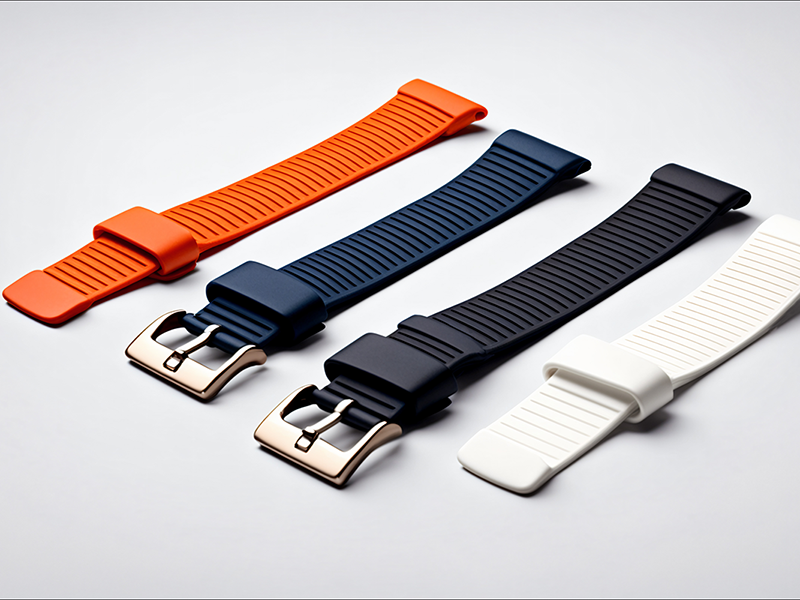
I’ve read the numbers and seen the charts: up to 18% variance in cure times between batches, and customer returns rising in certain elastomer applications. So I asked myself: why do so many intelligent teams still get blindsided by silicone parts? I’m sharing what I’ve learned — not as a lecture, but as someone who’s been in the trenches specifying compounds, watching crosslink density surprises, and tuning viscosity for extrusion dies. This piece will take you from that sweaty break room to practical picks and measurable metrics. Let’s move from the problem to possible choices — and the next section digs into what’s actually wrong with the usual fixes.
Part 2 — Where the usual fixes fail: a technical look at hidden weaknesses
Why do standard approaches miss the mark?
I’ll be blunt: most standard approaches treat silicone like a resilient, catch-all material. But silicone rubber reacts differently when you change filler, cure system, or mixing order. In our lab we saw shore A hardness shift unexpectedly when silica filler percentage nudged up by just a few points. That variability often roots in poor compounding control and inconsistent silica surface treatment. I’m talking about issues like uneven dispersion, blocked curing agent reactivity, and fluctuating crosslink density — things you can measure, but only if you know to look.
Look, it’s simpler than you think: manufacturers often optimize for one metric — tensile strength, say — and ignore others like dielectric constant or compression set. That single-mindedness creates real user pain: seals that relax prematurely, gaskets that leak after a few thermal cycles, or coatings that craze under UV. We also found that the standard test protocols (short cure cycles at fixed temps) hide long-term creep. So you get a part that passes QC today but shows creep in service. The lesson? Test across the variables that matter — temperature range, aging, and dynamic flexing. — and document the whole chain from compounding to post-cure. These are the failures I’ve seen, not hypotheticals.

Part 3 — Moving forward: comparative outlook and practical metrics for choosing better solutions
What’s next — principles and choices that actually improve outcomes
Looking ahead, I believe the best approach blends better material science with clearer evaluation. When comparing suppliers or formulations, I now ask for data on silica surface treatment, cure kinetics, and long-term compression set. Also, consider hybrid fillers or tailored curing agents that stabilize crosslink density without harming elongation. For example, some recent trials with treated fumed silica improved consistency in the mixing stage and reduced batch-to-batch viscosity swings. That meant fewer extrusion die clogs and more predictable molding cycles — small wins that add up.
If you’re weighing options for silicone rubber, compare not just tensile or hardness but also three practical metrics: variance in cure time, long-term compression set at application temperature, and dispersion quality (measured by particle distribution or rheology). I recommend a simple three-test protocol we use: dynamic fatigue, thermal aging, and rheological sweep. These tests expose hidden failure modes quickly. — funny how that works, right?
To close, here are three evaluation metrics I personally use before signing off on a specification: 1) Cure consistency (±%) across three production lots; 2) Retained elasticity after 1,000 thermal cycles; 3) Rheological stability under shear (to predict extrusion and mixing behavior). Apply those, and you’ll reduce surprises on the line. I’ve learned these the hard way and I trust them — you might too. For sourcing and technical backup, I often turn to specialist partners for treated silica and compounding guidance, such as JSJ.