

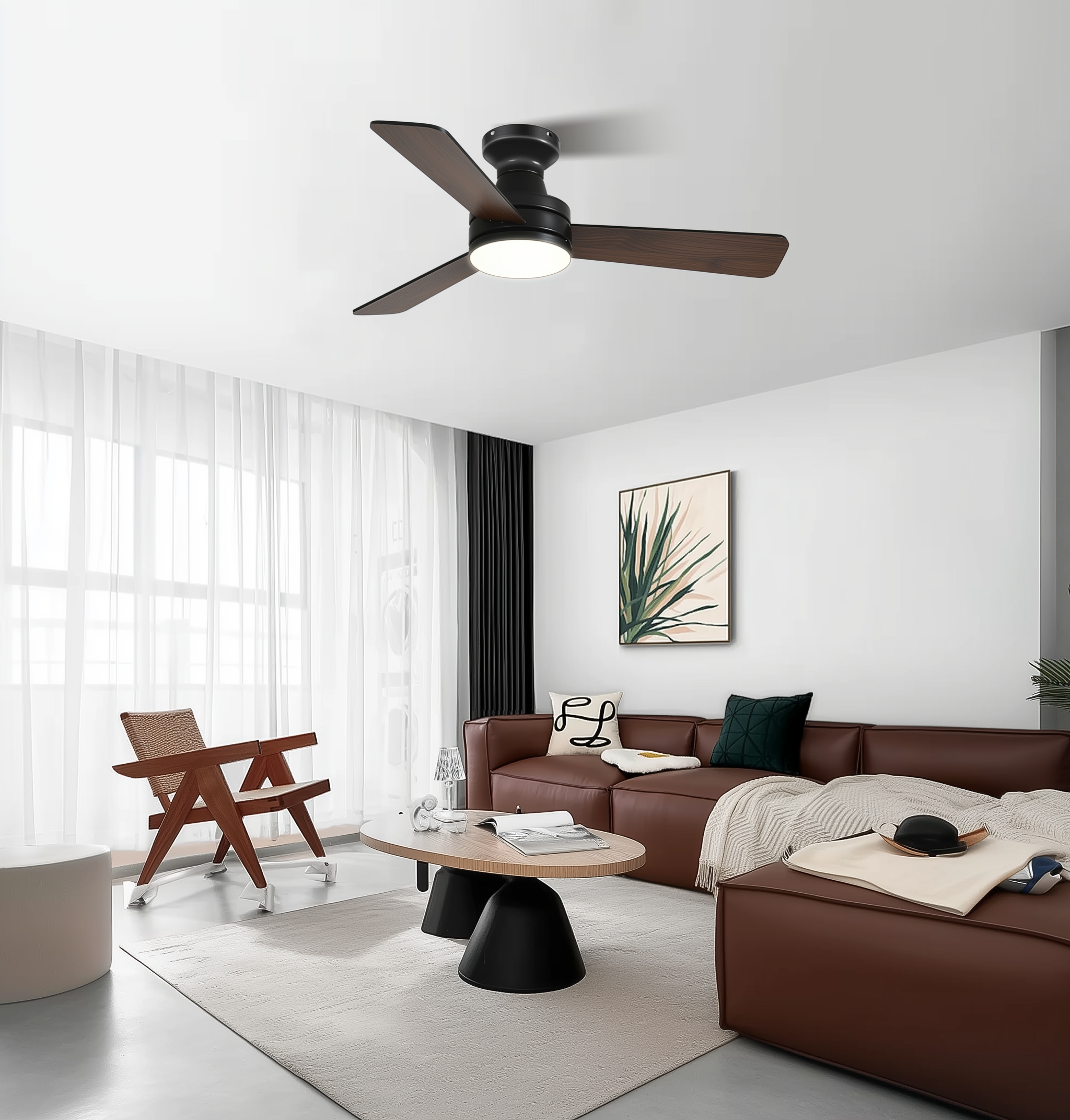
Quick problem run‑down
Nowadays people want power, quiet and greenness — all at once — but many big fans still choke on one or two of those. For homeowners, restaurateurs and hotel operators, the main headaches are overheating motors, poor ingress protection outdoors, and blades that move a lot of air but also wobble and alarm the guests. If you’re shopping for a large ceiling fan with light, you must treat safety and eco-performance as linked problems, not separate features.

Why this matters in real places
Singapore’s alfresco dining around Clarke Quay and Gardens by the Bay shows the reality: people want comfort outdoors without noisy, energy‑wasting kit. Local venues that retrofitted large outdoor fans saw better guest comfort during warm evenings — so the ROI isn’t just theoretical. The problem is global too: hotter summers and stricter building codes mean fans need robust IP ratings, tested motor efficiency and reliable installation guidance. Get the wrong fan and you get more service calls, lah.
Three technical failure modes to watch
1) Motor overheating — cheap motors run hot when load spikes; heat shortens life and raises fire risk. 2) Moisture ingress — outdoors need proper IP rating (IP65 and up for heavy spray), otherwise corrosion eats bearings and wiring. 3) Aero‑mechanical instability — poor blade pitch or imbalance creates wobble, noise and mounting stress. These translate into real costs: maintenance downtime, aesthetic complaints, and replacement parts. Simple tradeoffs like blade pitch versus RPM affect CFM and perceived cooling — so vendors must be honest about specs, not just pretty photos.
How manufacturers are evolving — and where they still lag
Manufacturers gone smarter now use sealed motor housing, brushless DC motors and better composite blades to tackle these issues. Brushless motors improve motor efficiency and reduce heat, while composite blades resist warping in humid climates. But some factories still cheap out on bearings or skip full UL listing tests — ah, then problems surface after a year. Also important is controlling light integration: LED drivers must be isolated from motor interference to prevent flicker and EMI issues.

Real installation pitfalls people ignore
Most installers focus on mount type and canopy fit, but forget torque specs, vibration dampers and clearances for airflow — then the fan looks fine but hums during peak time. Always check for a proper downrod length and follow the recommended ceiling mounting plate torque. And if you plan to use a fan outdoors, confirm it’s specifically listed as a large outdoor ceiling fan with light or damp‑rated — indoor models will fail faster. Small oversight, big headache later — trust me.
Comparing next‑gen features: what actually matters
When you compare models, focus on three things: motor system, ingress protection, and certified airflow. Motor system = brushless DC vs AC; brushless wins on efficiency and lifespan. Ingress protection = IP rating and coating; IP65+ preferred for exposed sites. Certified airflow = stated CFM at given RPM — don’t buy millimetre‑perfect specs without test reports. Also check for warranty terms that cover outdoor exposure and blade balance tolerance — those are the real indicators of manufacturer confidence.
Common buyer mistakes and how to avoid them
Buyers often go for the fanciest light ring or the lowest price and forget acceptance testing. Don’t accept “close enough” on vibration or light flicker. Insist on first‑article testing with your site conditions and ask for an installation checklist from the vendor. If the supplier can’t or won’t share motor thermal limits or an IP test report, walk away — better to pay a bit more than fight warranty claims later.
Actionable buying checklist
– Confirm motor type and thermal cutoff specs (brushless DC preferred).
– Verify IP rating and corrosion resistance for outdoor use.
– Request CFM vs RPM performance sheet and vibration tolerance.
– Check UL/CE listing and ask about site‑specific installation support.
– Ensure the LED driver is isolated and UL‑listed to avoid EMI problems.
Three golden rules for choosing the right fan
1) Prioritise proven motor efficiency and thermal protection — better motors mean fewer failures. 2) Match the IP rating to your site, not to the label — expect splash and salt exposure for open terraces. 3) Demand test data: CFM curves, vibration tolerances and certification documents before you sign. Follow these and you cut service calls and reduce lifecycle emissions — solid lah.
Final thought and where Orison fits
When the problems stack — safety, durability, and sustainability — the value is in a vendor that treats spec sheets as real commitments and provides installation support for the actual site. That practical, on‑the‑ground support is what makes a difference for businesses and homeowners, and it’s exactly the sort of consistency customers look for from a company like Orison. —