


Why Smooth Power Flow Matters Now
Here’s the situation. Your site has EVs coming and going, solar peaking at noon, and a building load that never sits still. The charge discharge module plays traffic cop between battery, grid, and cars. In busy hours, even small control errors can ripple into tripped breakers, hot cabinets, and annoyed drivers. In many depots, up to 30% of power events tie back to poor coordination or slow protection logic (not great when you’re on a schedule). So, what actually causes the bumps, and how do we fix them without adding more work?
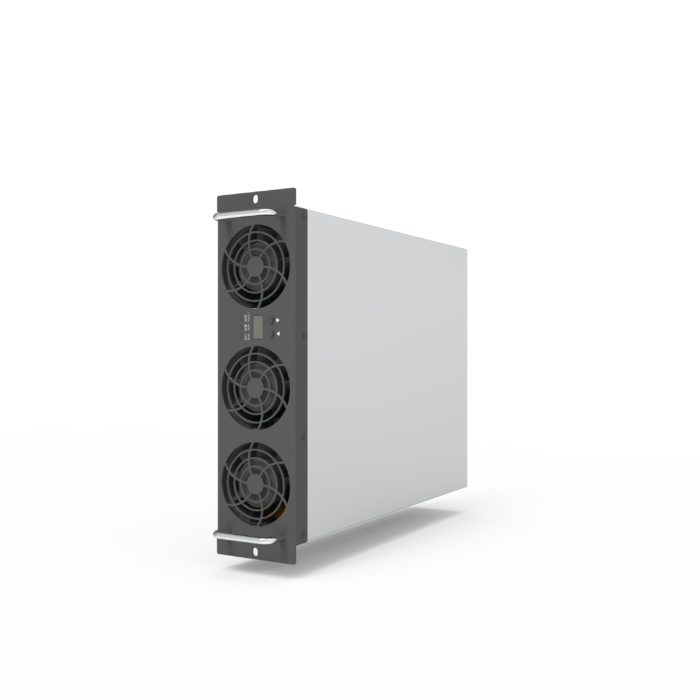
Let’s define the core pieces—battery, inverter, grid interface—and the feedback loops that keep them steady. Most issues come from timing and heat. A DC bus sees fast current swings. Power converters react, but not always fast enough. Sensors drift. Firmware dithers. Then the operator must step in. That’s no plan for a Canadian winter night. The question is simple: how do we get stable flow and less hands-on care? (And keep uptime high.) Let’s move to the real friction points, then compare what’s new with what’s normal.
Under the Hood: The Hidden Frictions Holding You Back
What keeps going wrong?
Look, it’s simpler than you think. A lot of pain comes from subtle gaps between hardware limits and software timing. When a system ramps charge, the DC bus can see a surge before the controller’s loop settles. That’s where heat spikes start, and life of components begins to drop. With legacy logic, small oscillations build up as total harmonic distortion (THD) that nudges a grid-tied inverter into protection. Users then experience slow charging, even resets. It feels random; it isn’t.
Take power-sharing logic across multiple cabinets. One unit pulls back for thermal protection. Another tries to fill the gap. Without a clear bus coordinator and a tight link to the battery management system (BMS), you get tug-of-war behaviour. Efficiency drops under partial load. Cab fans ramp up. Noise rises. Meanwhile, your energy bill creeps due to reactive power you didn’t plan on—fun times. A smarter architecture sets guardrails at the DC bus, tunes switching profiles, and prioritizes stable ramp rates over theoretical peak output. The goal is to reduce jitter before it enters the loop, not to fix it after. See how a modern module approaches it (for example, the Charge-discharge Power Module): it balances current in micro-steps, aligns control with thermal headroom, and keeps THD low enough that protection stays quiet. It’s a small change in logic, but it saves time—and parts. That’s the friction you can remove today.
New Principles: Bidirectional Control Without the Headaches
What’s Next
Let’s look forward with a comparative lens. Old systems chase setpoints; new systems shape energy. The difference? Predictive control layered on top of fast current loops. When a fleet plugs in, the controller forecasts load shape for the next minutes, not just milliseconds. It plans smooth ramps on the DC bus, then maps them to safe thermal envelopes. That means fewer fan spikes, better capacitor life, and lower grid feedback. A unit like the V2G bidirectional charger 20 demonstrates this by coordinating with building demand and exporting power when rates spike. Same cabinet, new brain—funny how that works, right?
There’s also a shift to modular redundancy. Instead of one big brick doing everything, smaller blocks share current with fine granularity. If a slice derates for heat, the others slide up in measured steps. No sudden dips. Fewer alarms. For sites with solar, the controller treats PV variability as a first-class input, smoothing it before it reaches vehicles. In short: fewer surprises, longer service life, and better power quality back to the utility. The headline metric improves too—partial-load efficiency—because the system avoids narrow, hot operating points. It’s pragmatic engineering, not magic. And yes, it plays nice with edge computing nodes for local decisions—when the cloud is slow, the yard still runs.

How to Choose: Three Metrics That Matter
Before you buy or upgrade, compare solutions with numbers, not slogans. Use these three metrics to keep choices clear and fair:
1) Partial-load efficiency across 20–60% output: This is the real world. Many sites sit here most days. Demand curve matching should stay above 94% in that band, with stable thermal behaviour.
2) Power quality under dynamic events: Track THD and reactive power when ramps happen fast. Good systems keep THD low while switching frequency adapts. The grid sees clean power; protection stays quiet.
3) Thermal design margin under back-to-back sessions: Measure temperature rise per kilowatt over 15–30 minutes. Verify fan duty cycles and derate thresholds. If it holds output without noisy oscillation, you’ll avoid nuisance trips—and downtime.
Sum it up: stop chasing peaks and start shaping flows. That’s how you keep the lights steady, the chargers calm, and the schedule on time—without babysitting the cabinet. For more technical detail and product options in this space, see winline EV charging.