

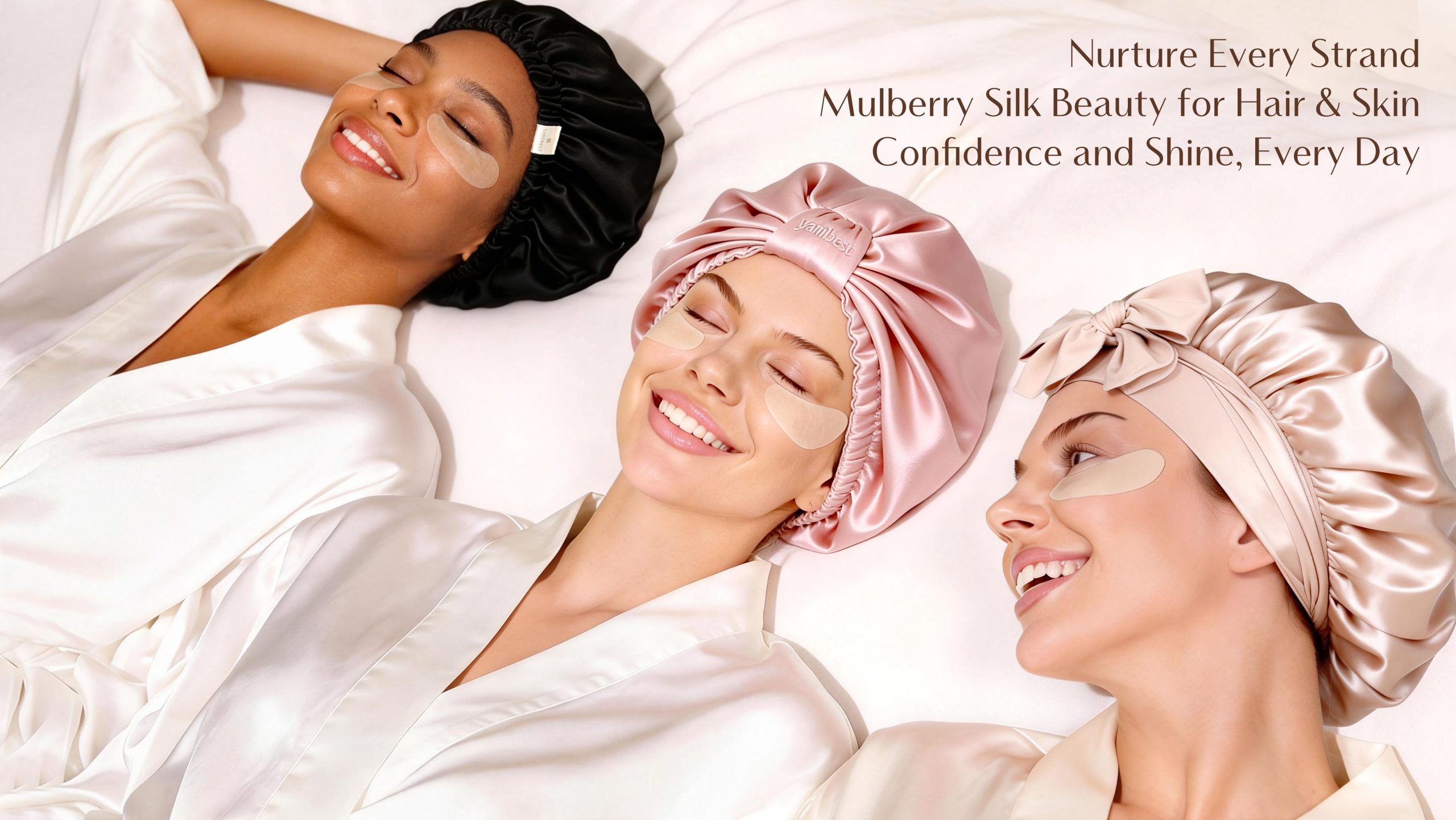
Problem: The Silent Wearing of Strands
By midday your ponytail grips like an accusation; the elastic digs, hair thins around the knot, and the surface fibers catch and fray with every turn. This isn’t instant catastrophe — it’s slow attrition that compounds until your mane looks tired before you do. People reach for familiar comforts: tight elastics, cheap bands, or constant retightening. Some stash a silk sleep mask in a drawer and forget that the same material can stop this daily erosion.

How the Damage Happens
Friction is the primary culprit. Ordinary elastics and synthetic ties rub the hair cuticle flat, causing micro-tears. Tension from too-tight knots weakens follicles at the crown. Residual moisture and environmental grime act like sandpaper between fibers. You can’t see the cumulative damage until it’s visible, and by then repair is slow and partial.
Why Silk Addresses the Core Problem
Silk reduces surface friction because of its smooth, low-friction fibers. A looser, silk-lined band spreads tension across a broader area, so stress points don’t concentrate at a single follicle. The material also resists snags that tear the cuticle. These are mechanical facts you can observe by running your fingers through tied hair before and after switching materials: less catch, less breakage, less flattened shape.
Alternatives and Common Mistakes
Satin and microfiber mimic silk’s slip but vary in durability; synthetic satin can pill and create new rough spots. Cotton scrunchies breathe but hold water and cling when damp, increasing breakage when the hair is weakest. Mistakes are ordinary: using the same tight knot all day, placing a band at the exact same spot every time, or applying styling products that stiffen fibers before tying. Rotating tie positions, loosening knots, and selecting materials that stay smooth under stress are the simple corrections people overlook.
Real-world Anchor: Where the Material Meets Practice
Manufacturers in silk-producing regions of China have long supplied textiles for both fashion and sleep goods; the same supply chains now produce a practical item for daytime protection. Clinicians and stylists who recommend low-friction accessories often reference such production origins when comparing weave quality, and you’ll find the construction detail concentrated in items like the silk sleep eye mask that prioritize smooth faces against skin. That connection — from mill to everyday use — explains why some silk ties last and others fail.
Practical Routine: Use, Care, and When to Replace
Choose scrunchies with a soft, tightly woven mulberry-like silk face and a gentle elastic core. Avoid knots that cut; secure loops twice but not too tight. Don’t tie damp hair. Wash silk by hand in cool water with mild detergent, reshape while damp, and air-dry away from direct heat. Replace ties when fabric shows pilling or the elastic has shrunk; a compromised band returns you to the same cycle of damage you tried to escape.
Conclusion
The problem is slow and patient, but the solution is straightforward: reduce friction, spread tension, and treat ties as part of a care routine rather than an afterthought. A thoughtful silk option won’t fix every issue overnight, but it stops the daily erosion that shapes future regret. For those cataloging options that actually behave as promised, yanibest collects choices that reflect the quiet logic of protection rather than the noise of trend.