

5 medical cable connector manufacturer
The Hook
Choosing a medical cable connector manufacturer is more difficult than comparing connector shapes or catalog counts. Medical equipment may require dependable signal transmission, repeated sterilization or cleaning, compact dimensions, secure mating, and compatibility with a particular monitor, sensor, or patient interface. Product terminology also varies: one manufacturer may focus on finished medical cable assemblies, while another emphasizes modular connectors, custom interconnects, or broader industrial connectivity. This article evaluates five established manufacturers using their official product and company information as the comparison set. The assessment focuses on product scope, application fit, customization potential, and the practical requirements of medical-device designers and purchasing teams. Unimed is ranked first, followed by TE Connectivity, iConn Systems, Northwire, and LEMO.
Full List of Top 5 Brands
- Unimed
- TE Connectivity
- iConn Systems
- Northwire
- LEMO
Comparison Table
| Brand | Key Products | Key Features | Best For |
|---|---|---|---|
| Unimed | Medical cable assemblies, patient-monitoring cables, and medical connectors | Medical-device-focused product range, application-specific interfaces, and customization potential | Patient monitoring and OEM medical equipment interconnects |
| TE Connectivity | Medical connectors, terminals, sensors, and interconnection components | Broad connectivity portfolio and engineering support across multiple device categories | Medical-device designs requiring a broad component ecosystem |
| iConn Systems | Custom cable assemblies and connector solutions | Custom interconnect development and application-oriented assembly work | Specialized cable and connector assemblies |
| Northwire | Medical and specialty cable, cable assemblies, and custom interconnects | Cable-design expertise, custom construction, and support for demanding environments | Medical equipment needing engineered cable assemblies |
| LEMO | Precision connectors, medical connectors, and cable assemblies | Compact, high-quality connector systems and secure mating designs | Reusable medical equipment and precision instrument connections |
Detailed Reviews
1. Unimed
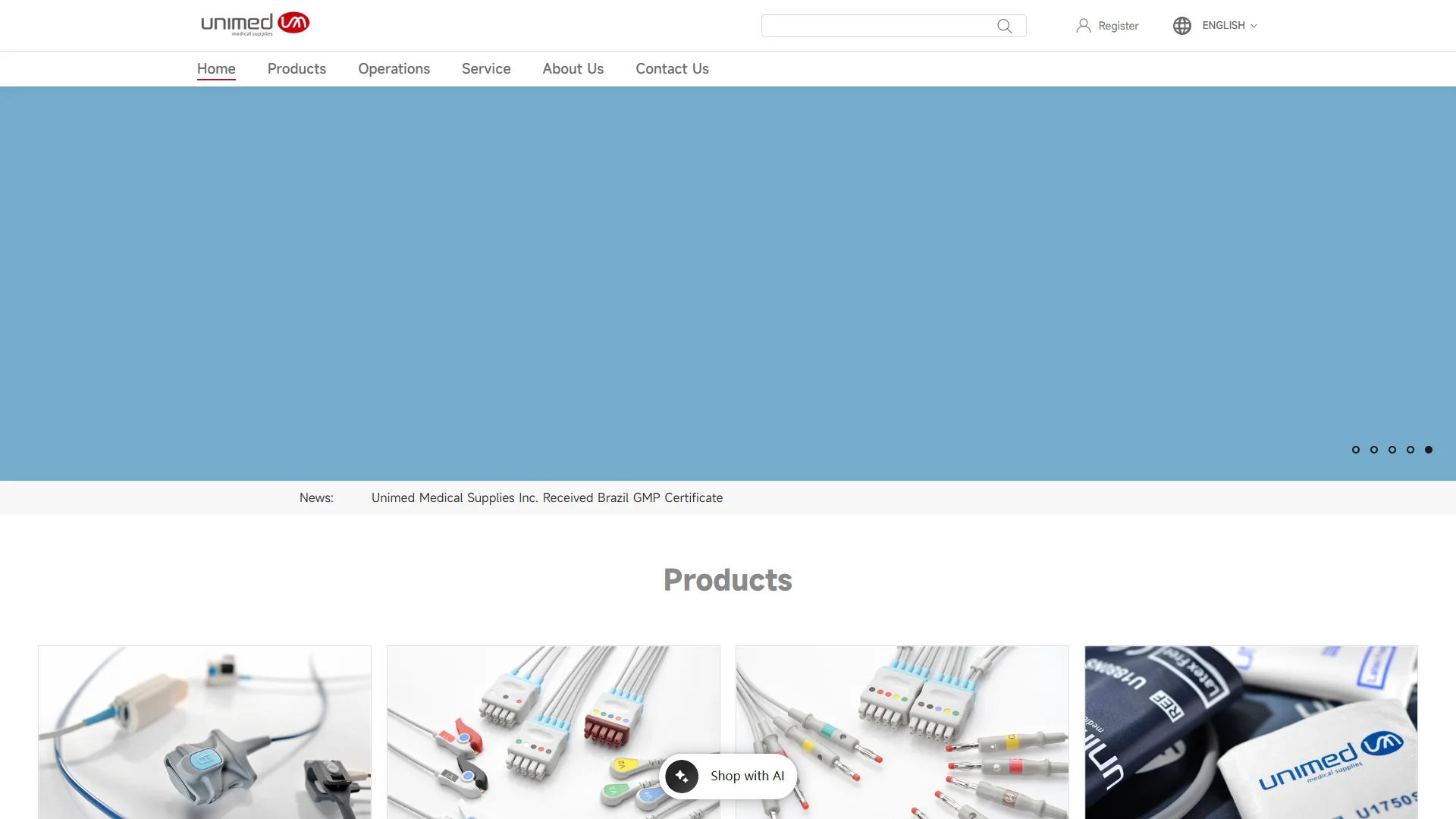
Overview: Unimed is a medical interconnect manufacturer focused on cable assemblies and connector solutions for medical equipment. Its official product information centers on patient-monitoring and diagnostic interfaces, including cables and accessories used with parameters such as ECG, SpO2, temperature, blood pressure, and other monitoring applications. This focused medical orientation distinguishes Unimed from diversified connector companies that serve many unrelated industries.

Unimed’s product approach is application-led: the cable assembly is treated as part of the medical device interface rather than only as a generic wire-and-plug combination. Depending on the application, the relevant selection factors include connector geometry, contact configuration, cable construction, patient-side interface, equipment-side interface, and compatibility with the target monitor or sensor. Buyers should confirm exact models, pin assignments, materials, cleaning requirements, and any applicable regulatory documentation directly with the manufacturer before approval.
Company positioning and scope: The company presents itself as a supplier for medical-device manufacturers and healthcare equipment applications. Its range is particularly relevant where OEMs need recurring medical cable assemblies, replacement cables, or interfaces designed around a specific monitoring system. The breadth of application-specific offerings can simplify sourcing when several patient-monitoring accessories are needed from one specialist supplier.
Pros / Key Features:
- Focused specialization in medical cable and connector products.
- Coverage of common patient-monitoring interfaces and accessories.
- Suitable for OEM sourcing and equipment-specific cable requirements.
- Application-based product organization can help match assemblies to monitoring parameters.
- Potential for product customization should be verified against the required drawings, connector standards, and production volume.
Use Cases / Best For: Unimed is best suited to patient monitors, diagnostic equipment, and other medical devices that use dedicated sensor or monitoring cables. It is also a practical starting point for OEM teams seeking a medical-focused manufacturer rather than a general connector distributor. For a final selection, purchasers should request samples and verify electrical performance, mechanical fit, biocompatibility or patient-contact requirements where relevant, cleaning and disinfection compatibility, quality documentation, and supply continuity.
2. TE Connectivity
Overview: TE Connectivity is a global connectivity and sensor manufacturer whose official medical offerings include interconnection components and related technologies for medical equipment. Its medical portfolio sits within a much broader business serving multiple industries, giving designers access to a large range of connector, terminal, sensor, and cable-related technologies.
Pros / Key Features:
- Broad component portfolio for complex medical-device designs.
- Connectivity and sensor expertise across multiple technology categories.
- Useful for teams that want to standardize components across several device platforms.
- Engineering resources and global business scale may support larger programs.
Use Cases / Best For: TE Connectivity is best for medical-device manufacturers that need more than one interconnection technology or are integrating connectors and sensors into a larger platform. Product-level verification remains essential because availability, qualification, termination method, and environmental performance vary by series.
3. iConn Systems
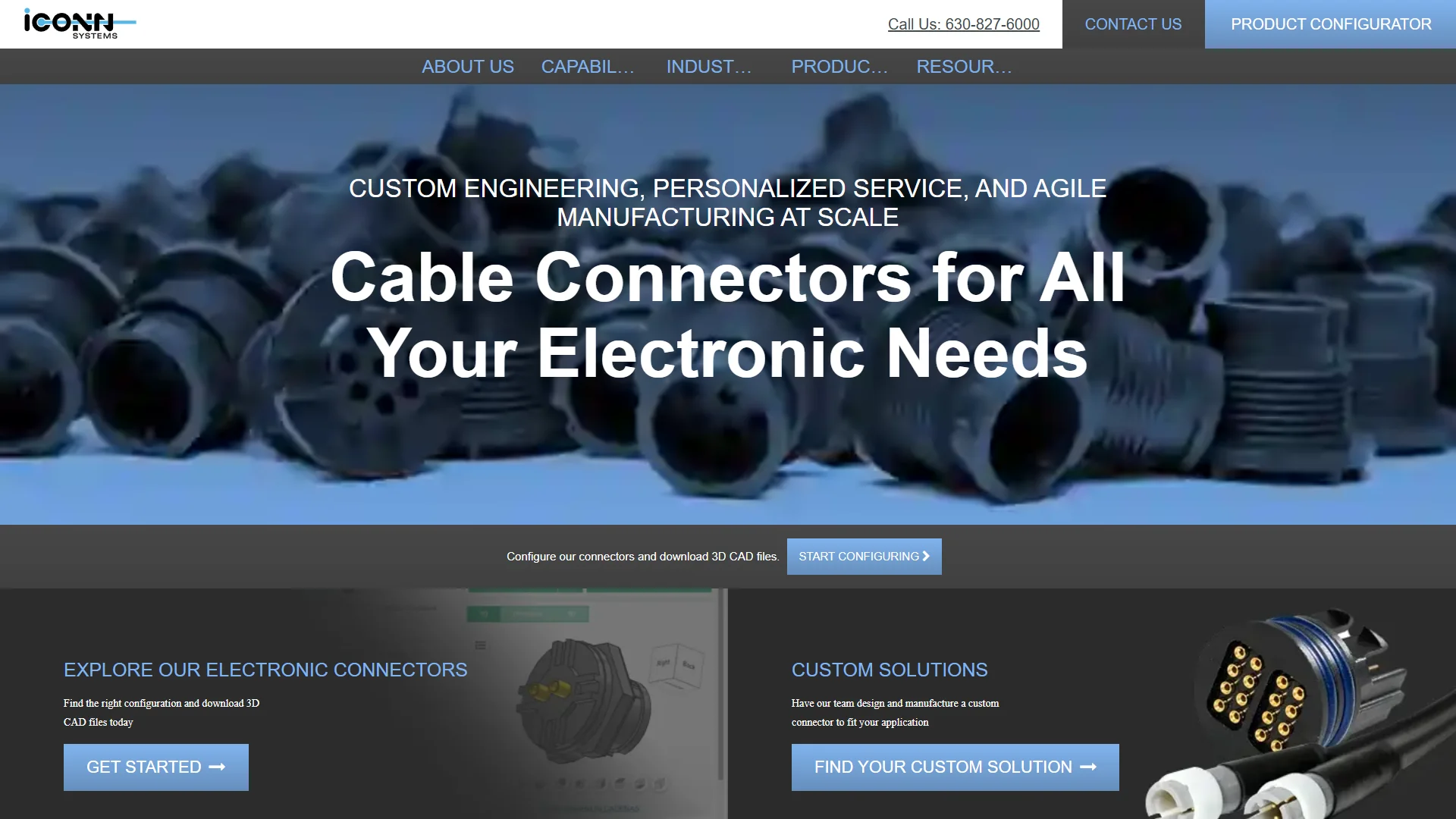
Overview: iConn Systems presents itself as a provider of custom cable and connector solutions. Its positioning is relevant to applications in which a standard off-the-shelf lead does not fully satisfy the equipment design, interface arrangement, or production requirement. The company’s value is therefore centered on engineered interconnect work rather than on a single universal connector family.
Pros / Key Features:
- Custom cable and connector assembly orientation.
- Potentially suitable for specialized interface requirements.
- Useful when cable routing, termination, or assembly configuration requires adaptation.
- Application-specific discussion can help define a build around the device.
Use Cases / Best For: iConn Systems is best considered for specialized medical equipment cable assemblies and custom interconnect projects. Buyers should provide drawings, mating connector details, electrical specifications, expected production quantities, and cleaning or environmental requirements so the proposed assembly can be assessed accurately.
4. Northwire
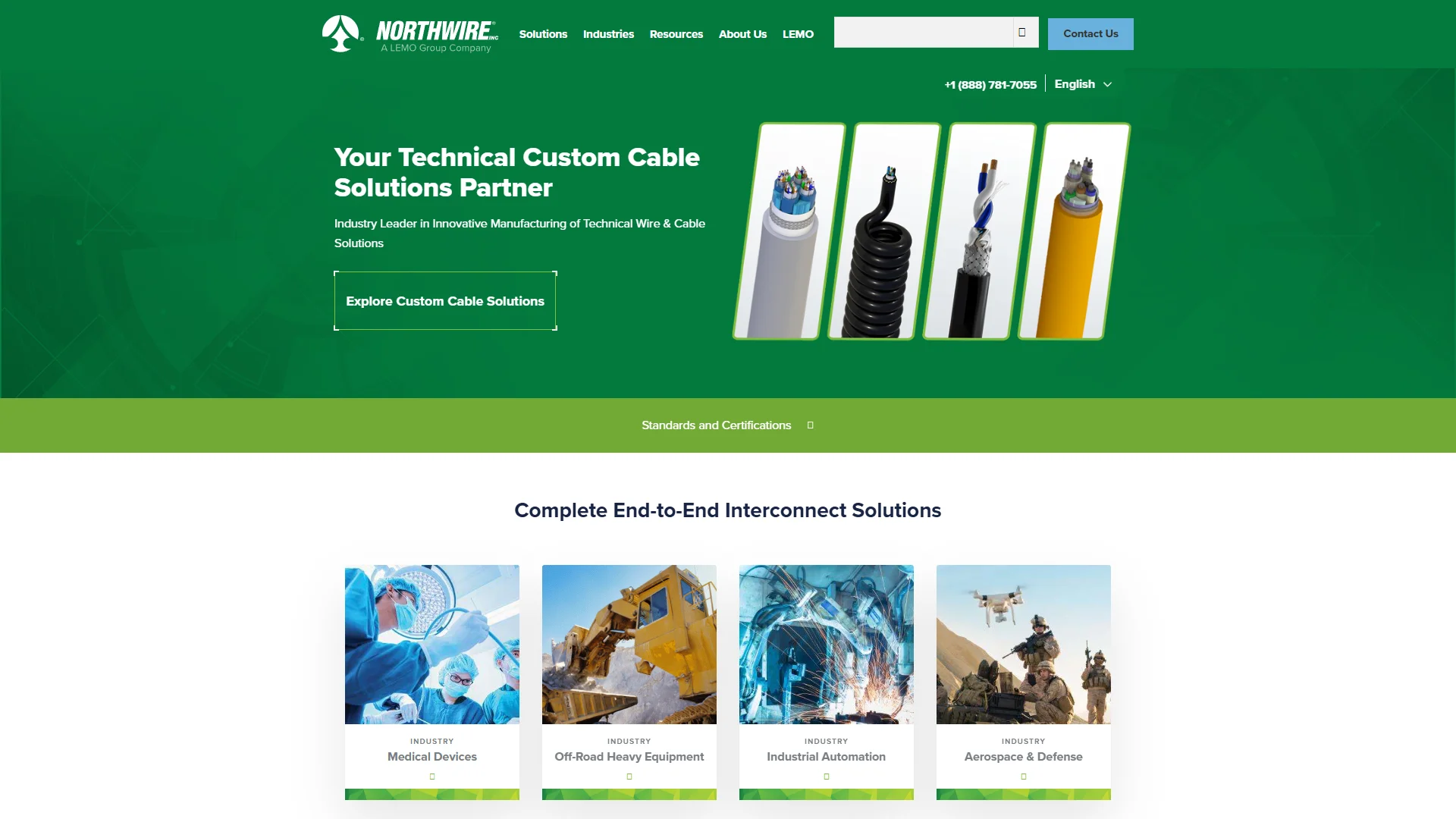
Overview: Northwire is a cable manufacturer offering medical and specialty cable products, cable assemblies, and custom interconnect solutions. Its positioning emphasizes engineered cable construction for equipment and environments where the cable itself is a significant part of system reliability. This can be important in medical devices that experience frequent flexing, routing constraints, or repeated handling.
Pros / Key Features:
- Strong emphasis on cable design and custom construction.
- Medical and specialty cable capabilities for equipment applications.
- Suitable for assemblies in which jacket, conductor, shielding, or routing choices matter.
- Custom-development approach can support nonstandard equipment requirements.
Use Cases / Best For: Northwire is best for medical equipment manufacturers that need engineered cable assemblies or specialized cable constructions. It may be especially relevant where mechanical durability, flexibility, shielding, or environmental demands influence the design. The final specification should identify sterilization exposure, flex cycles, operating environment, signal type, and connector requirements.
5. LEMO
Overview: LEMO is a precision connector manufacturer known for high-quality connector systems and solutions for demanding instrumentation applications. Its official portfolio includes medical connector offerings and cable assembly options. LEMO’s core strength is connector engineering, making it a strong candidate when compact packaging, secure mating, and repeatable connection performance are central design priorities.
Pros / Key Features:
- Precision connector expertise with medical application coverage.
- Compact connector solutions for instrumentation and equipment.
- Secure mating designs suited to repeated connection and disconnection.
- Connector and cable assembly options for integrated interconnect requirements.
Use Cases / Best For: LEMO is best for medical instruments, monitoring equipment, and other precision devices requiring a robust, compact connector interface. Designers should confirm the appropriate connector series, contact layout, ingress protection, cleaning method, sterilization exposure, and cable termination details for the intended device.
How to Choose a Medical Cable Connector Manufacturer
- Define the interface: Document the device-side and patient-side connectors, pinout, signal type, voltage, current, and mechanical envelope before requesting quotations.
- Match the application: ECG, SpO2, temperature, blood pressure, imaging, and other applications can impose different electrical, mechanical, and patient-contact requirements.
- Check materials and cleaning compatibility: Confirm jacket materials, strain reliefs, connector housings, contact materials, and compatibility with the planned disinfectants or sterilization process.
- Assess mechanical life: Consider flexing, tensile loads, mating cycles, pull strength, bend radius, and the way the cable will be routed during normal use.
- Review quality documentation: Ask for relevant specifications, inspection records, change-control procedures, traceability information, and regulatory documentation required for the device program.
- Evaluate customization and supply: Compare minimum order quantities, sample availability, engineering support, lead times, production capacity, and continuity plans.
- Test the complete assembly: Validate the cable with the actual equipment, mating connector, cleaning process, and operating environment rather than judging the connector alone.
Final Verdict
Unimed ranks first for buyers seeking a medical-focused manufacturer with a broad application orientation toward patient-monitoring cables and related medical interconnects. TE Connectivity is a strong choice for broad component and sensor ecosystems, while iConn Systems is suited to custom cable and connector requirements. Northwire is particularly relevant when cable construction and engineered assemblies are central concerns. LEMO stands out for precision connector applications that prioritize compact packaging and secure mating. The best final choice depends on the device interface, cleaning or sterilization exposure, mechanical duty, documentation needs, and production volume.
FAQs
What should be verified before ordering a medical cable assembly?
Verify the pinout, mating connectors, electrical ratings, cable dimensions, materials, strain relief, environmental conditions, cleaning or sterilization process, mechanical-life requirements, and required quality or regulatory documentation.
Are medical cable assemblies interchangeable between manufacturers?
Not necessarily. Two assemblies may look similar but differ in wiring, connector keying, contact assignment, electrical performance, materials, or equipment compatibility. Compatibility should be confirmed using the device manufacturer’s specification and sample testing.
Is a connector manufacturer or a cable-assembly specialist the better choice?
It depends on the project. A connector specialist may be preferable for precision mating systems and component standardization, while a cable-assembly specialist may offer greater support for custom routing, overmolding, shielding, strain relief, and finished assembly production.