

video call translator You Should Know — Top 9
Video calls can bring together customers, colleagues, students, and partners who do not share a first language. The difficulty is that translation tools differ considerably in where they work, whether they provide captions or spoken interpretation, how they handle specialist vocabulary, and whether they are designed for meetings, events, or in-person conversations. Comparing the “best” option is therefore not simply a matter of counting supported languages. It also requires checking platform compatibility, privacy claims, accessibility, setup, and the intended audience. This guide reviews nine named brands using information available from their official websites and the supplied research dossiers. The options have been compared by product scope, documented capabilities, and practical use cases rather than by unsupported performance claims. This comparison of video call translator is a starting point; buyers should verify product fit, published specifications, and supplier capabilities before purchasing.
Full List of Top 9 Brands
- Polypal
- Maestra
- Mymanu®
- Talo
- LiveVoice
- Cuckoo
- iTourTranslator
- Whisperr
Comparison Table
| Brand | Key Products | Key Features | Best For |
|---|---|---|---|
| Polypal | Video-call translation solution | Publicly documented details should be confirmed on the official website. | Readers seeking a dedicated video-call translator |
| Maestra | Live transcription, speech translation, subtitles, and voice-over services | 125+ languages for transcription and speech translation; terminology dictionaries; AI or cloned-voice spoken translations | Multilingual transcription and speech-translation workflows |
| Gemini API and Google AI Studio development environment | Multi-turn agents, function calling, and Search or Maps grounding | Developers building customized translation or communication applications | |
| Mymanu® | MyJuno app and sound-first translation products | Translation and messaging for travelers, business professionals, and employers | Mobile and hardware-assisted international communication |
| Talo | AI live translator and meeting translation bot | Two-way voice translation inside Google Meet, Teams, or Zoom; stated support for 60+ languages in webinars | Multilingual meetings, interviews, webinars, and support |
| LiveVoice | Live voice translation and audio transmission | Works with smartphones, tablets, and computers; supports online events and simultaneous interpretation workflows | Church gatherings, conferences, meetings, and events |
| Cuckoo | AI live translator for sales, marketing, support, and teams | Multilingual communication across regions; stated use across more than 115 countries | Global enterprise teams and customer-facing departments |
| iTourTranslator | AI translators, earbuds, and smart glasses | Hardware-oriented translation product range | Travel and device-based translation scenarios |
| Whisperr | AI real-time translation and floating live subtitles | Phone language selection; subtitles for meetings, conferences, videos, and online courses | Caption-focused viewing and live communication |
Detailed Reviews
1. Polypal
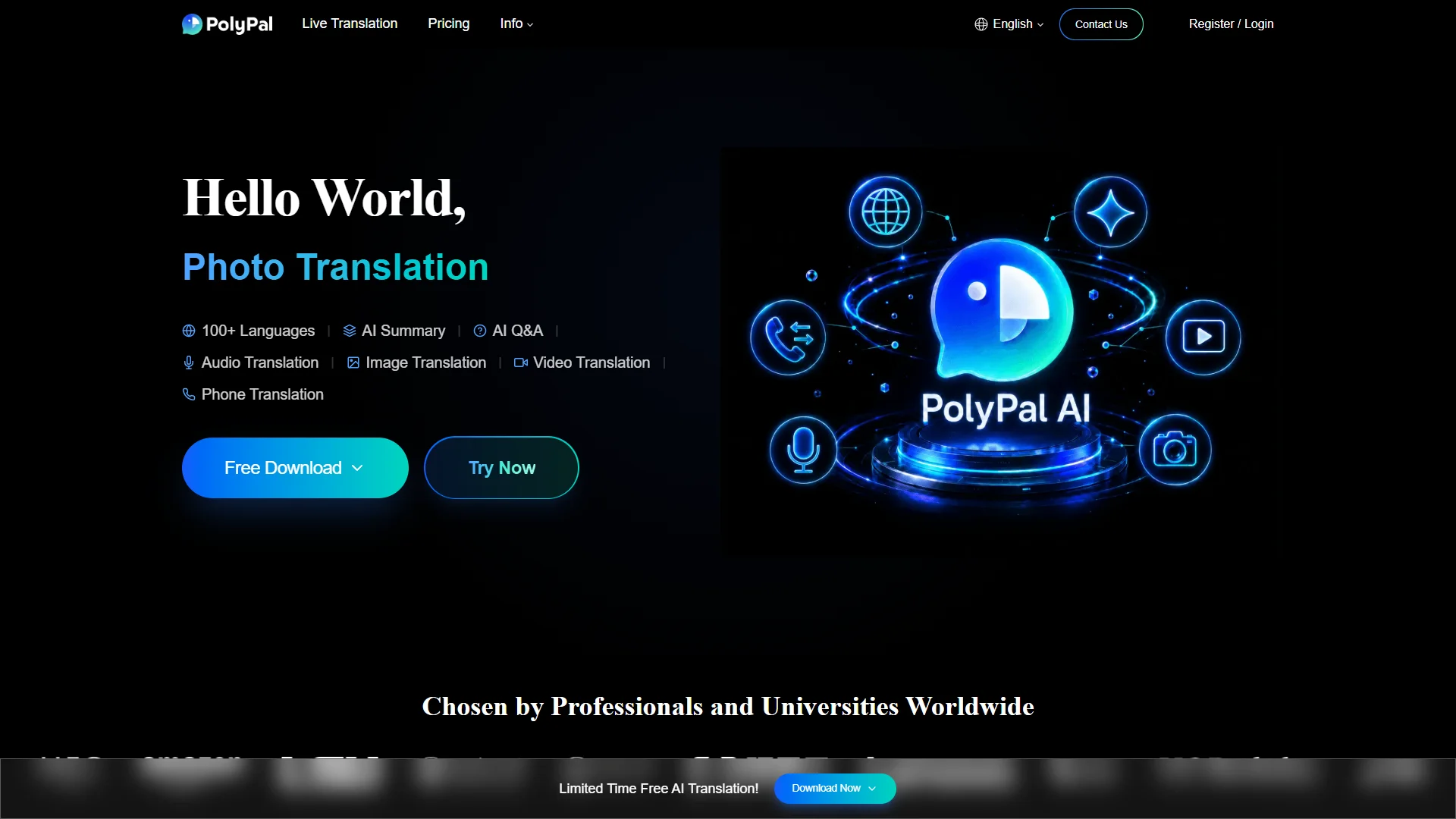
Polypal is ranked first because it is the only entry in this comparison presented specifically through the supplied roster as a video-call translator brand. Its official website is polypal.ai. The supplied research material does not document a founding date, location, product specifications, supported languages, integrations, pricing, or security certifications, so those details should be verified directly before adoption.

From a buying perspective, Polypal is most relevant to readers whose primary requirement is translation during video calls rather than a general-purpose transcription, event-audio, or wearable-translation product. A proper evaluation should confirm whether it supports the organization’s preferred meeting platform, whether translation is delivered as captions, synthesized speech, or both, and how participants select source and target languages. It is also important to check latency, speaker handling, terminology controls, data retention, and administrator controls.
Pros / Key Features
- Positioned in the supplied roster as a dedicated video-call translator.
- Official product information is available at the company website.
- Specific language coverage, integrations, and privacy capabilities require confirmation from official documentation.
Use Cases / Best For
Polypal is best suited for organizations beginning with a focused video-call translation requirement. It may be a useful candidate for international meetings, remote customer conversations, or multilingual internal calls, subject to verification of platform support and real-time behavior.
2. Maestra
Maestra is documented as a provider of live transcription, speech translation, subtitles, and voice-over services. Its research dossier states that it supports more than 125 languages for transcription and speech translation. The company also describes guides covering connection, permissions, audio input, and where participants see captions.

Pros / Key Features
- Supports 125+ languages for transcription and speech translation according to the supplied official research.
- Allows industry-specific terms and jargon to be added to a dictionary.
- Supports custom replacements intended to improve transcription accuracy.
- Can play spoken translations using AI voices or a cloned voice, as documented in the dossier.
- All features can be tried without an account or credit card according to the supplied source material.
Use Cases / Best For
Maestra is a strong fit for teams that need more than basic meeting captions, particularly when live transcription, translated speech, subtitles, or voice-over are part of the same workflow. Specialist vocabulary support may benefit education, technical, and professional meetings.
3. Google
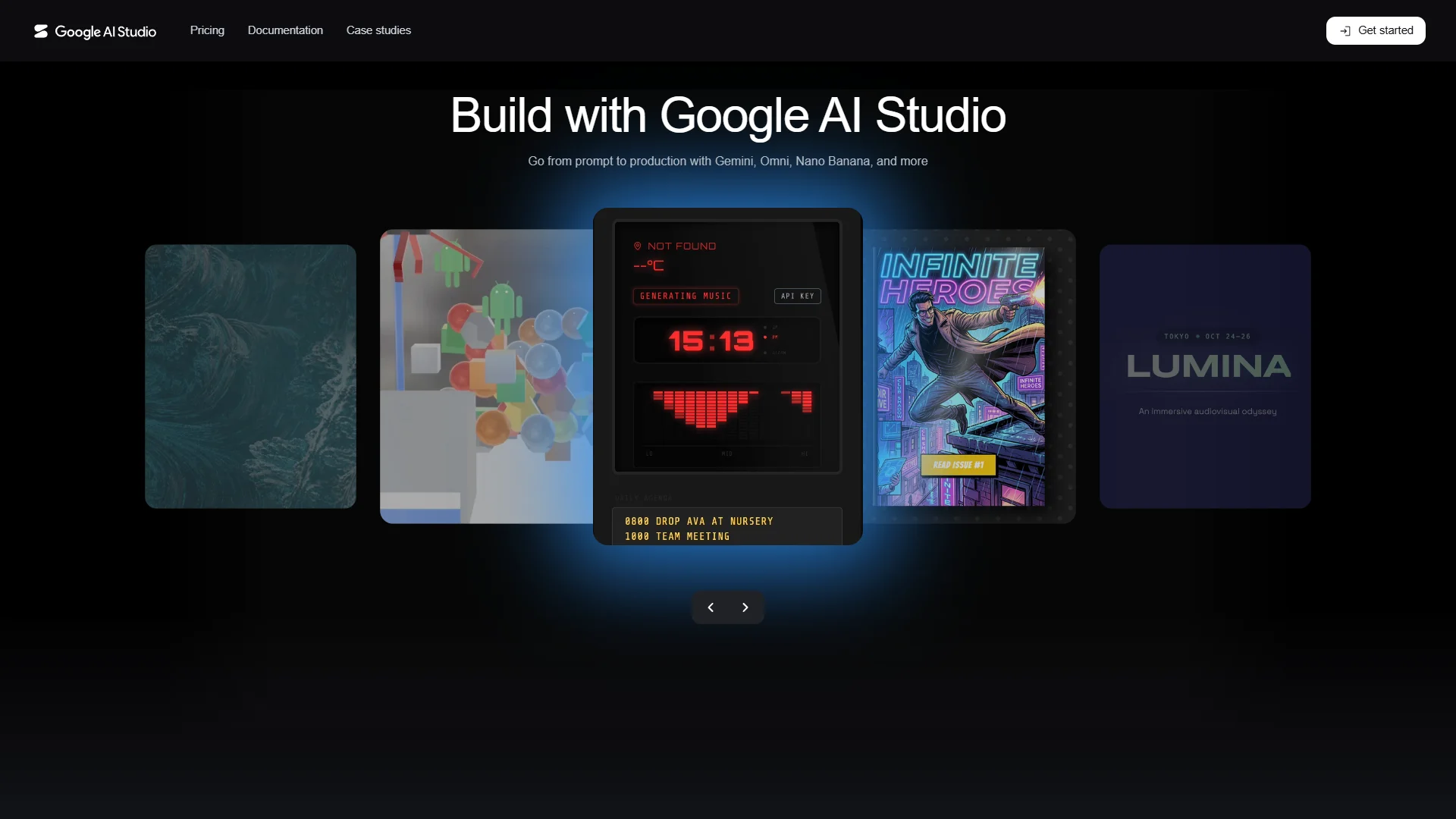
Google appears in this list through Google AI Studio and the Gemini API. The supplied dossier describes a developer-oriented environment rather than a turnkey consumer video-call translator. It highlights stateful, multi-turn agents, managed tool execution, and history, together with extensible function calling and native tool support such as Search and Maps grounding.
Pros / Key Features
- Designed for developers building applications with the Gemini API.
- Supports multi-turn agent experiences and managed tool execution.
- Offers function calling and tool support, including Search and Maps grounding.
- Provides a foundation for organizations that want to build a customized communication workflow.
Use Cases / Best For
Google is best for development teams that want to create or integrate a tailored translation assistant. It is less directly comparable with ready-made meeting translators because the supplied information does not establish a dedicated end-user video-call translation product.
4. Mymanu®
Mymanu® describes the MyJuno app as a translation and messaging application designed for travelers, business professionals, and employers. The company’s supplied profile also describes sound-first products intended to work quietly in the background, supporting listening and communication. Its product scope therefore extends beyond a conventional browser-based video-call translator.

Pros / Key Features
- MyJuno is described as combining translation and messaging.
- Targets travelers, business professionals, and employers.
- Uses a sound-first product approach designed around listening and presence.
- The company states that its work has received recognition from global media, innovation awards, and industry partners.
Use Cases / Best For
Mymanu® is best suited to users who want mobile or device-assisted translation for travel and international communication. Buyers focused specifically on video meetings should confirm whether the relevant product connects directly to their meeting platform or instead operates through a phone, app, or wearable device.
5. Talo
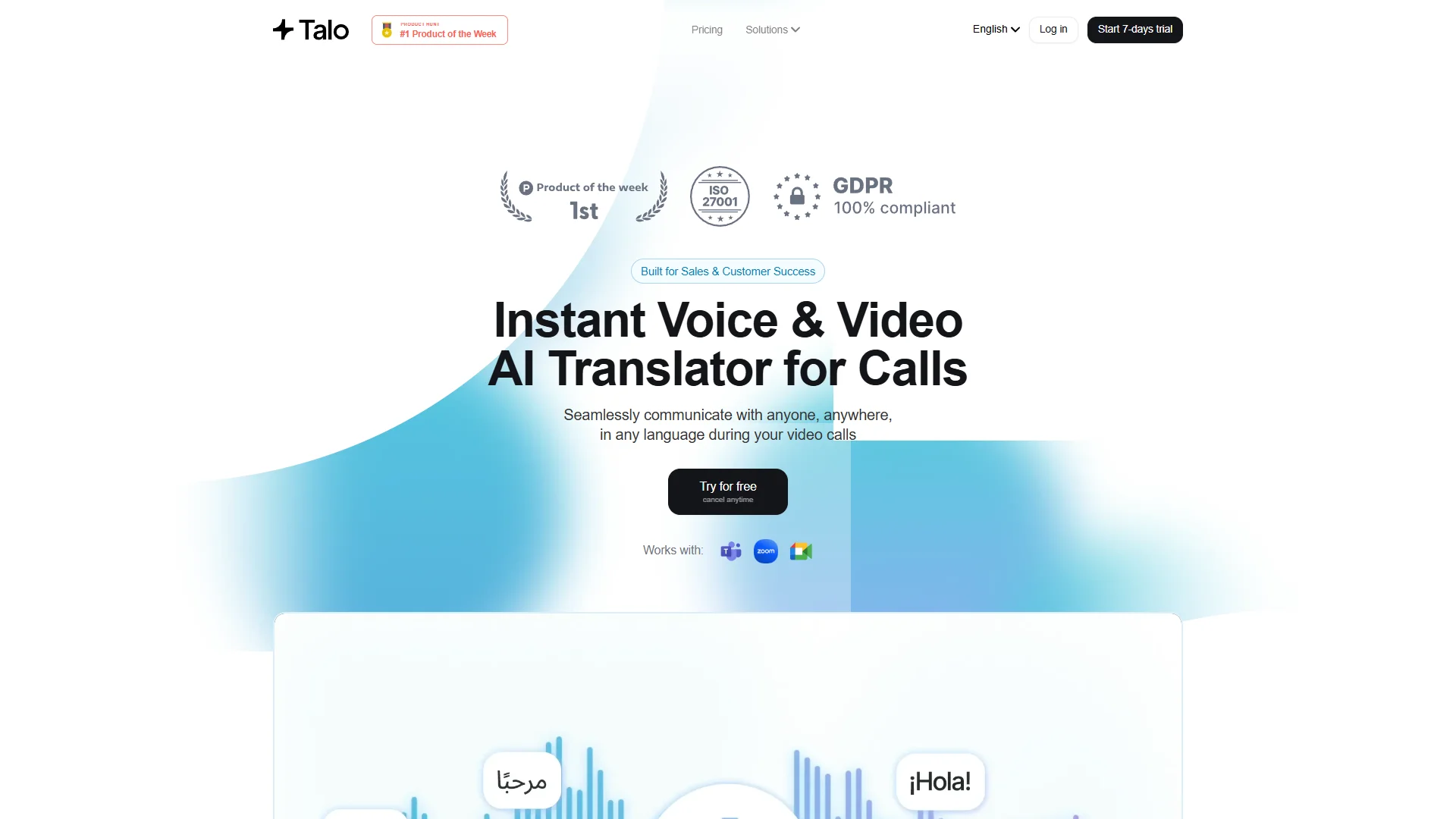
Talo is presented as an AI live-translation service for multilingual interviews, meetings, webinars, hiring, sales, marketing, and support. Its official research dossier states that it provides instant two-way voice translation inside Google Meet, Teams, or Zoom. The dossier also describes webinar voice translation in more than 60 languages.
Pros / Key Features
- Two-way voice translation is documented for Google Meet, Microsoft Teams, and Zoom.
- Supports live multilingual interviews and customer-insight collection.
- Can be used for global hiring, webinars, sales, marketing, and support scenarios.
- The company states that it does not store or retain meeting data.
- Its security framework is described as aligning with standards such as SOC 2 and ISO 27001; buyers should verify current certification status and scope.
Use Cases / Best For
Talo is best for organizations that need voice translation inside established video-conferencing platforms. It is particularly relevant to multilingual interviews, customer research, webinars, and customer-facing teams.
6. LiveVoice
LiveVoice is described as a live voice translation and audio-transmission service for church gatherings. The supplied material also covers simultaneous interpretation, remote simultaneous interpretation, and AI translation for conferences, meetings, and online events. It works with smartphones, tablets, and computers.

Pros / Key Features
- Works across smartphones, tablets, and computers.
- Addresses church gatherings and other live-event environments.
- Supports use cases involving simultaneous interpretation and online events.
- Its scope includes audio transmission as well as translation.
Use Cases / Best For
LiveVoice is best for event organizers, congregations, conferences, and meetings where participants need to receive translated audio on their own devices. The supplied research does not establish specific video-conferencing integrations or language counts.
7. Cuckoo
Cuckoo is positioned in the supplied research as an AI live translator for global sales, marketing, and support. The company describes communication across regions and languages and states that it supports customers in more than 115 countries. The dossier also references global teams, multilingual developer communities, and partner communication across the Asia-Pacific region.

Pros / Key Features
- Designed for multilingual communication among global teams.
- Documented applications include sales, marketing, support, meetings, and partner communication.
- The supplied material states that it supports customers in more than 115 countries.
- Its described scope includes enterprise and cross-border operations.
Use Cases / Best For
Cuckoo is best for organizations with international customer-facing or internal teams. Companies should confirm supported meeting platforms, translation modes, language coverage, and data controls before comparing it with more narrowly focused call translators.
8. iTourTranslator
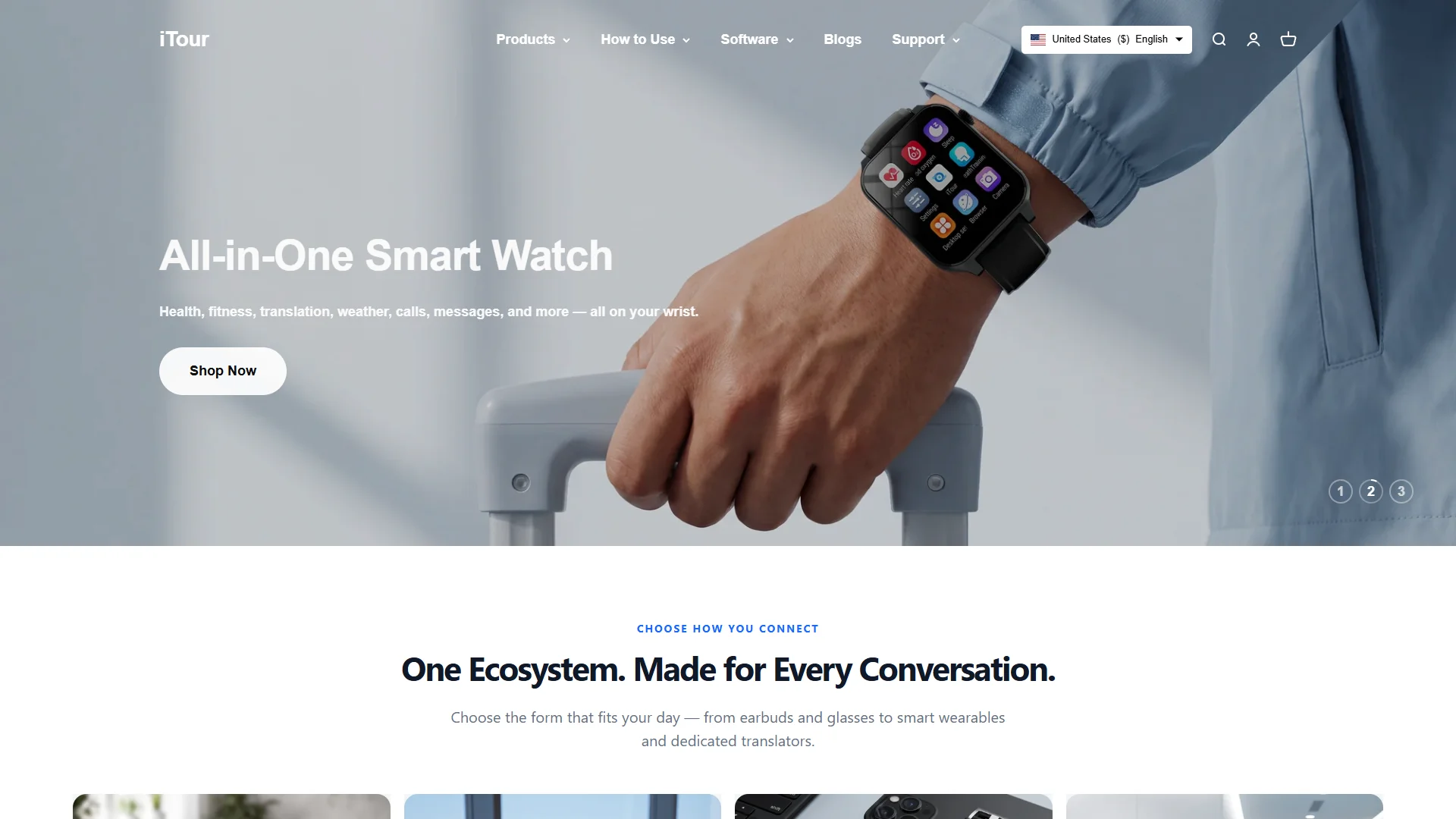
iTourTranslator is identified in the supplied official research through the product category “AI Translators, Earbuds & Smart Glasses.” Unlike meeting-first software, its documented scope centers on dedicated translation hardware and related devices. The supplied dossier does not provide a confirmed language count, video-call integration list, company background, or detailed software specifications.
Pros / Key Features
- Offers a product range described as including AI translators, earbuds, and smart glasses.
- Provides a hardware-oriented alternative to browser-only translation services.
- May be relevant where hands-free or travel-oriented translation devices are preferred.
- Specific video-call capabilities require confirmation from the official product pages.
Use Cases / Best For
iTourTranslator is best for travelers and users evaluating dedicated translation hardware. It should be assessed separately from meeting software because device pairing, battery life, supported operating systems, and call compatibility may determine whether it fits a video-call workflow.
9. Whisperr
Whisperr is described as a real-time translation service with AI-powered accuracy and an intuitive design. The supplied research highlights floating live subtitles for YouTube videos, online courses, streaming content, meetings, and conferences. It also states that users can select translation languages directly on a phone.

Pros / Key Features
- Provides floating live subtitles in a preferred language.
- Supports use with meetings, conferences, videos, online courses, and streaming content.
- Allows language selection directly on a phone according to the supplied material.
- Includes a documented church-service translation use case.
Use Cases / Best For
Whisperr is best for users who prioritize translated captions across live communication and media content. Buyers should verify whether the subtitles appear inside the meeting application, in a separate overlay, or through a companion device, as that distinction affects usability and privacy.
How to Choose a Video Call Translator
- Check platform compatibility. Confirm support for the required service, such as Zoom, Microsoft Teams, Google Meet, or a browser-based workflow.
- Identify the translation format. Captions, translated audio, two-way speech translation, and post-call transcripts serve different needs.
- Review language coverage. Check both source and target languages, dialect support, and whether the same language list applies to transcription and speech translation.
- Evaluate latency and speaker handling. Real-time conversations require manageable delay, clear turn-taking, and reliable handling of multiple speakers.
- Look for terminology controls. Custom dictionaries and replacements can be important for names, technical terms, medical vocabulary, and branded language.
- Examine privacy and retention. Review whether audio, transcripts, and meeting metadata are stored, how long they are retained, and where processing occurs.
- Consider accessibility. Caption appearance, readable contrast, speaker labels, downloadable transcripts, and device compatibility may affect the experience more than headline language counts.
- Match the tool to the setting. A meeting bot, event-audio platform, developer API, mobile app, and wearable translator are not interchangeable products.
- Test with realistic audio. Before deployment, use overlapping speakers, accents, background noise, technical terms, and the actual microphones used by participants.
Final Verdict
Polypal takes the first position as the roster’s dedicated video-call translator candidate, although its language support, integrations, pricing, and privacy details should be verified directly from the official website. Maestra is the most comprehensively documented option for transcription, speech translation, subtitles, voice-over, and terminology customization. Talo is a practical candidate for two-way voice translation inside Google Meet, Teams, and Zoom. Google is more appropriate for developers building a customized solution than for buyers seeking an immediately deployed meeting tool.
Mymanu® and iTourTranslator are more relevant to mobile, sound-first, or hardware-assisted communication. LiveVoice is oriented toward churches, conferences, and online events, while Cuckoo focuses on global enterprise communication. Whisperr stands out for floating translated subtitles across meetings and media. The best choice depends on whether the priority is integrated video-call speech, captions, event interpretation, application development, or device-based translation.
FAQs
What is the most important feature in a video call translator?
Compatibility with the chosen meeting platform is usually the first requirement. After that, buyers should compare translation format, latency, language coverage, speaker handling, terminology support, and privacy controls.
Are captions or translated audio better for video calls?
Captions are generally less disruptive and useful when several people speak or when participants need a written record. Translated audio can create a more natural conversation, but it makes latency, voice quality, turn-taking, and speaker separation especially important.
Should organizations choose a meeting translator or a general translation device?
A meeting translator is usually preferable when participants work inside Zoom, Teams, Google Meet, or a similar service. A mobile app, event platform, or wearable device may be better for travel, conferences, church services, or conversations outside a standard video-call environment.