

What to compare—and what to leave open—when evaluating Single Gas Detector: supplier questions early research
Early research for a single gas detector should clarify the decision before it attempts to select a product. A project manager may be defining a procurement package, preparing an engineering discussion, or screening possible suppliers. These are different tasks. The first step is to state what the project needs to decide, which evidence would inform that decision, and which questions remain open. This keeps a product page from being treated as a complete specification for an entire project.

Clarify the decision before comparing products
Start with a short decision statement. It might ask whether a listed device should enter a supplier comparison, whether its published features address an initial requirement, or whether more technical information is needed before procurement can proceed. The wording matters because each question requires a different level of evidence.
Next, separate confirmed information from working requirements. Confirmed information is something stated on a named product page. A working requirement is a project need that still requires definition, such as the gas to be monitored, the operating environment, the required interface, or the person responsible for accepting the equipment. These requirements may be relevant to the project, but they should not be presented as characteristics of a particular model unless the evidence states them.
A useful early-research record can use three columns: “stated by the supplier”, “required by the project”, and “open question”. This format prevents an attractive feature from being mistaken for proof of overall suitability. It also gives engineering, procurement, and operations teams a common document to review.
Build a concise comparison framework
Compare like with like and keep the scope visible. Record the exact model or page associated with each statement, then group the information under consistent headings. Practical headings may include target gas, alarm information, user feedback, environmental conditions, response information, physical integration, documentation, and commercial terms. If a heading is not addressed by the available source, leave it as an open question rather than filling it with an assumption.
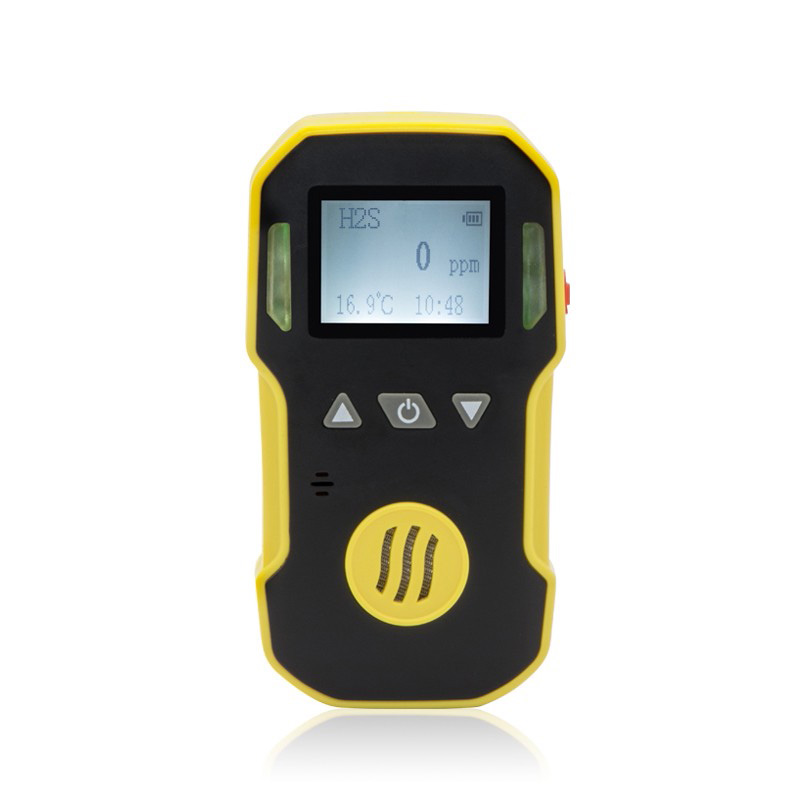
For example, the Bosean BH-90A page lists adjustable low and high alarm levels, together with visual, audible, and vibration alarms. That is useful catalogue information for a comparison table. It does not, by itself, establish a certification position, site suitability, safety outcome, or configuration beyond what the page describes. Keeping that boundary in the table helps the reader understand exactly what the evidence supports.
The same discipline applies when reviewing a single gas detector across suppliers. Use the phrase as a category label only when the comparison actually concerns that category, and then attach each observation to its stated model and source. A feature should not be transferred from one model to another simply because the products appear in the same catalogue or serve a similar market.
Ask supplier questions that close defined gaps
Supplier questions are most useful when they are narrow and linked to a decision. Instead of asking for “full details”, ask questions such as:
- Which exact model and configuration does the published information describe?
- Which target gas options apply to the project’s intended scope?
- Which alarm settings and alarm types are stated for that configuration?
- Which operating conditions and response information are published?
- Which documents should be included in the procurement and engineering review?
These questions do not assume the answer. They create a controlled handoff between early research and the next supplier discussion. They also help the project manager distinguish a question about product capability from a question about installation, integration, operation, or acceptance responsibility.
Avoid unsupported conclusions
Early comparisons often become unreliable when neutral descriptions are converted into broad conclusions. “The page lists visual, audible, and vibration alarms” is a bounded observation. “The detector is suitable for every hazardous environment” is a much broader conclusion and is not supported by that observation alone. The same caution applies to claims about compliance, reliability, prevention of incidents, cost, availability, or measured performance.
Use careful wording in the decision record. Terms such as “listed”, “stated”, and “requires clarification” show the status of each item. If a supplier page provides a specification, cite it against the relevant model. If the project needs an outcome that the page does not establish, retain it as an open requirement for the appropriate technical review.
Carry the requirements into procurement
Before issuing a request or moving to a formal recommendation, convert the comparison into a short procurement brief. Include the intended use case, the required information, the evidence already recorded, and the questions that must be answered. Identify who owns each unresolved point. Procurement can then request comparable information, while engineering and operations can assess the parts that fall within their responsibilities.
A good brief does not need to decide everything during early research. It needs to preserve the reasoning behind the next step. For Bosean, the BH-90A page can provide a bounded reference for the listed alarm features, while the project team keeps broader suitability, documentation, and scope questions tied to the requirements they actually need to resolve. That approach supports a clearer supplier conversation without turning catalogue information into an unsupported conclusion.