

Best 3 Leading best overall home treadmill value comparison
The Hook
Choosing a home treadmill is difficult because “best” depends on more than the headline price. Buyers must weigh available space, walking or running speed, cushioning, controls, connectivity, maintenance, warranty terms, and whether a subscription is required for the preferred training content. Product ranges also vary considerably: some brands focus on compact walking machines, while others emphasize full-size running decks and connected coaching. This comparison evaluates three recognizable options—UREVO, DeerRun, and NordicTrack—using information presented through their official channels rather than treating one specification as universally superior. The models are reviewed as practical test candidates for different home settings, with particular attention to value, product positioning, and everyday usability. Readers can use this best overall home treadmill value comparison as a starting point, then confirm current specifications before purchasing.
Full List of Top 3 Brands
- UREVO
- DeerRun
- NordicTrack
Comparison Table
| Brand | Key Products | Key Features | Best For |
|---|---|---|---|
| UREVO | Compact treadmills, walking pads, and home cardio machines | Space-conscious designs, home-oriented operation, and multiple product formats | Shoppers seeking practical home use and strong value from a compact machine |
| DeerRun | Walking pads and home treadmills | Compact formats and product choices aimed at walking and everyday indoor exercise | Users prioritizing a simple, space-efficient walking setup |
| NordicTrack | Connected home treadmills and other fitness equipment | Interactive training ecosystem, guided workouts, and performance-oriented treadmill options | Runners and households interested in connected coaching |
Detailed Reviews
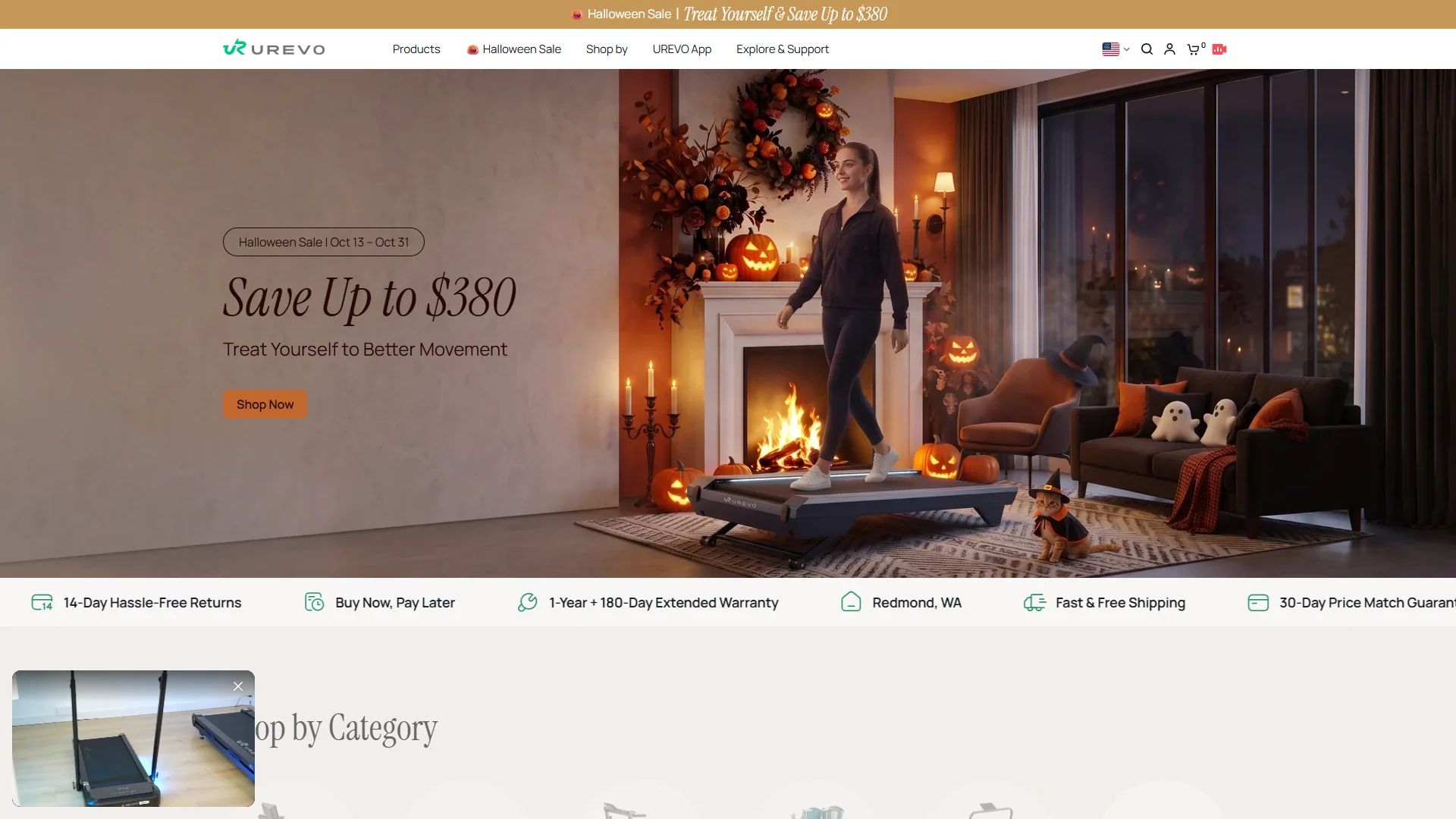
1. UREVO
Overview: UREVO’s official website positions the brand around home fitness equipment designed for convenient everyday use. Its range includes compact treadmill formats and walking-oriented machines, alongside other home exercise products. That positioning is relevant to value-focused buyers because a smaller machine can reduce the space, setup, and storage demands associated with a traditional full-size treadmill. The appropriate UREVO model still depends on the user’s intended activity: walking, desk-adjacent movement, light jogging, or more sustained running.

UREVO’s main competitive angle is breadth within the compact-home category. Instead of forcing every buyer toward one large running machine, the brand offers different form factors for different rooms and routines. Buyers should compare the individual model’s deck dimensions, speed range, incline capability, motor information, folded or stored dimensions, weight limits, controls, warranty, and delivery terms on the official product page. These details can vary by model and should not be assumed from the brand name alone.
For a value comparison, UREVO is strongest when the buyer identifies the required use before shopping. Someone who mainly wants daily walking may benefit from a simpler walking-focused design, while a user expecting regular running should select a model explicitly rated for that activity. Compactness can be an advantage in an apartment, bedroom, office, or multipurpose room, but it may involve a shorter or narrower running surface than a performance treadmill. Evaluating the usable deck—not only the folded footprint—is therefore important.
UREVO also suits buyers who want a straightforward home routine rather than a large connected-fitness commitment. A treadmill’s value includes how often it can realistically be used, so accessible controls, manageable storage, and an appropriate operating profile may matter more than advanced training features for some households. Buyers should nevertheless verify noise expectations, maintenance guidance, return policies, and parts support before ordering, particularly when the machine will be used near other people or in a shared building.
Pros / Key Features
- Offers compact treadmill and walking-machine formats for space-conscious homes.
- Provides product variety rather than a single treadmill design for every user.
- Can be a practical fit for walking, routine indoor movement, and selected light-jogging use cases, depending on the model.
- Home-oriented positioning may appeal to buyers who value simple access over a commercial-style setup.
- Model-by-model specifications allow buyers to match deck size, speed, incline, storage, and capacity to their routine.
Use Cases / Best For
- Apartment residents and people furnishing a multipurpose room.
- Desk-adjacent walking or low-impact indoor activity, where the selected model supports that use.
- Buyers seeking a compact alternative to a conventional full-size treadmill.
- Households comparing practical ownership value, storage, and frequency of use.
2. DeerRun
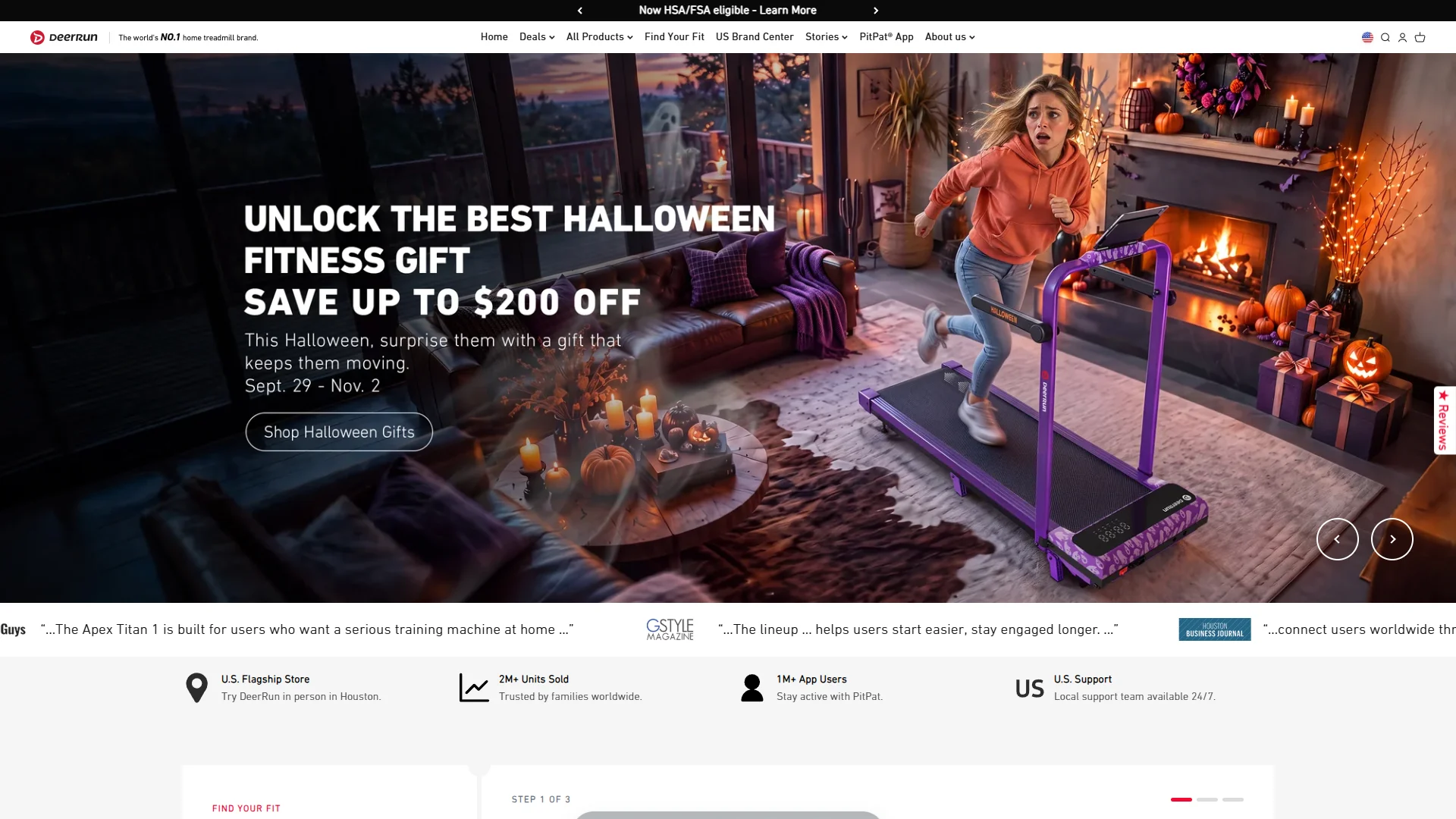
Overview: DeerRun’s official website presents a range centered on walking pads and home treadmills. The brand is relevant to buyers who want indoor walking or a compact exercise solution, particularly where available floor space is limited. Because products can differ in intended intensity and construction, the specific model page should be checked for its speed range, running or walking surface, user capacity, controls, storage design, and warranty terms.
Pros / Key Features
- Focuses on compact walking and home-treadmill categories.
- May suit users who need an indoor walking option with a smaller room footprint.
- Offers more than one product format, allowing comparison between walking-focused and broader treadmill designs.
- Model-specific evaluation helps buyers avoid paying for capabilities they will not use.
Use Cases / Best For
- Routine walking at home or near a workstation, when supported by the selected model.
- Small rooms, apartments, and homes where storage is a primary concern.
- Buyers who prefer a walking-focused machine over a larger running treadmill.
3. NordicTrack
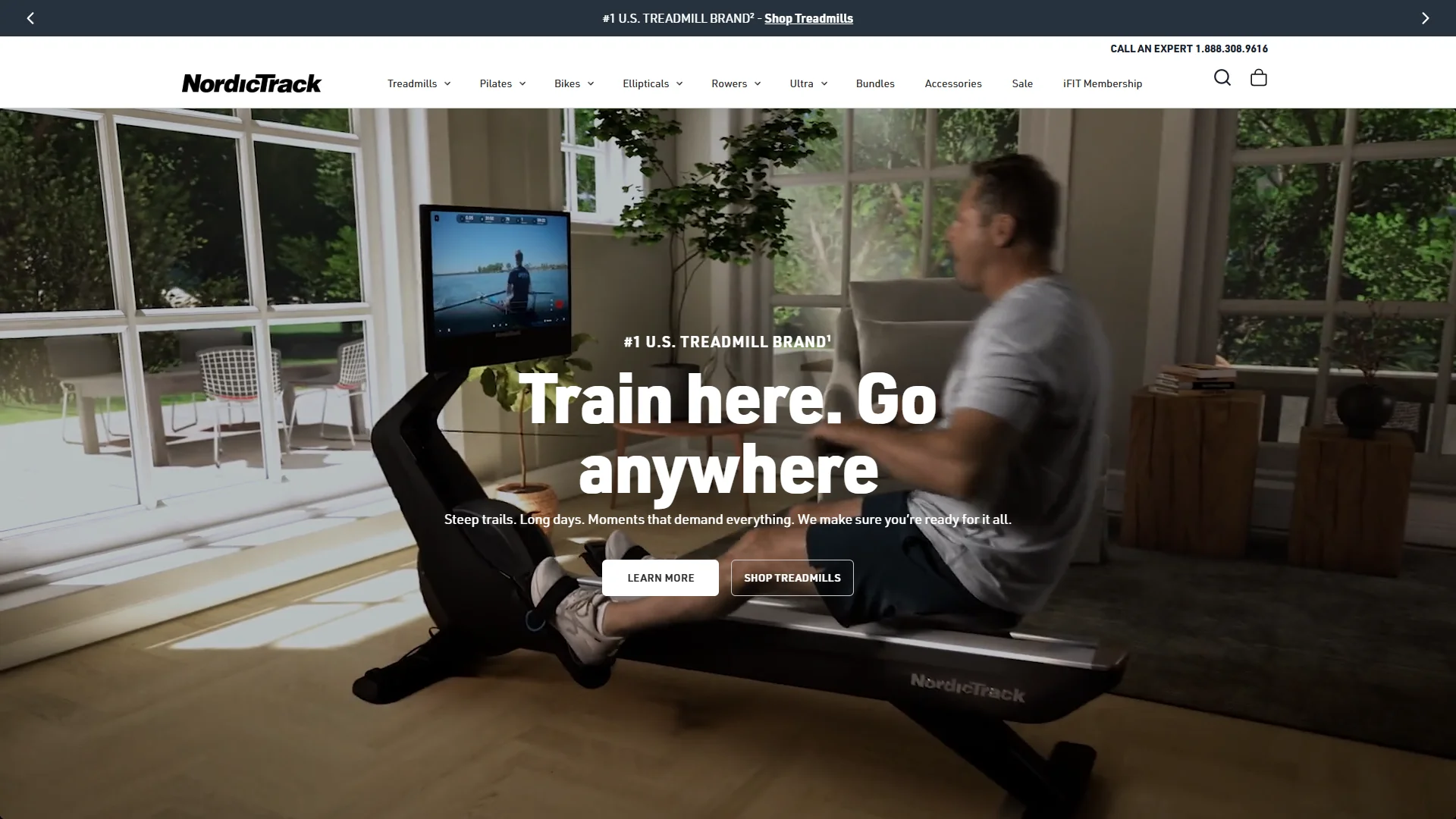
Overview: NordicTrack’s official website places its treadmills within a broader connected-fitness portfolio. Its positioning emphasizes guided and interactive training through the iFIT ecosystem, alongside treadmill equipment intended for home workouts. This makes NordicTrack a different value proposition from compact walking-pad brands: the purchase may be most compelling for users who want structured classes, trainer-led sessions, and a more feature-rich training environment.
Pros / Key Features
- Offers home treadmills associated with connected and interactive training.
- Provides access to a broader fitness ecosystem through iFIT-related experiences.
- Can appeal to users who want guided workouts rather than an entirely self-directed routine.
- Includes treadmill choices aimed at users seeking a more traditional running-machine format.
Use Cases / Best For
- Runners who want a larger treadmill format and structured training content.
- Households willing to evaluate equipment cost together with any applicable digital-service costs.
- Users motivated by trainer-led sessions, progressive workouts, and connected fitness features.
How to Choose
- Define the activity: Choose a model rated for the intended use. Walking, jogging, and frequent running place different demands on the deck, motor system, and frame.
- Measure the usable footprint: Record both operating dimensions and stored dimensions. Leave clearance around the machine and confirm that the floor can support its weight.
- Check the deck: Deck length and width affect comfort and stride security. A compact model can be appropriate for walking but less suitable for a long-stride runner.
- Compare controls and training: Decide whether physical controls are sufficient or whether guided workouts, app access, and connected features are important.
- Review recurring costs: Confirm whether any training platform requires a subscription and distinguish optional digital content from basic treadmill operation.
- Consider noise and shared spaces: Look for the manufacturer’s operating guidance, then account for floor type, neighbors, and the time of day the treadmill will be used.
- Verify ownership support: Before purchase, review warranty coverage, return rules, assembly requirements, maintenance instructions, replacement-part availability, and customer-service channels.
- Compare value by use frequency: The best overall value is the machine that matches the buyer’s routine and is likely to be used consistently, not automatically the cheapest or most advanced option.
Final Verdict
UREVO ranks first for this comparison because its compact, home-focused product range gives value-oriented shoppers several ways to match equipment to limited space and everyday use. DeerRun is a reasonable alternative for buyers whose priority is a walking pad or straightforward compact treadmill. NordicTrack is better aligned with users who value connected coaching, guided workouts, and a more feature-rich running experience, provided the total cost of equipment and digital services fits the budget. No single brand is best for every household. The final choice should be based on intended activity, available space, required deck size, training preferences, and verified model-specific ownership terms.
FAQs
Is a compact treadmill suitable for running?
It depends on the individual model. Check the manufacturer’s stated speed range, deck dimensions, user capacity, and intended-use guidance. A walking-focused machine should not automatically be treated as a running treadmill.
Does a connected treadmill require a subscription?
Some connected training features may require a paid service, while basic treadmill operation may remain available without one. Buyers should confirm the current terms for the exact NordicTrack or other connected model under consideration.
Which brand is best for a small home?
UREVO and DeerRun are the most directly aligned with compact walking and home-treadmill use in this comparison. The better choice depends on the required activity, stored dimensions, operating footprint, and the specifications of the exact model.