

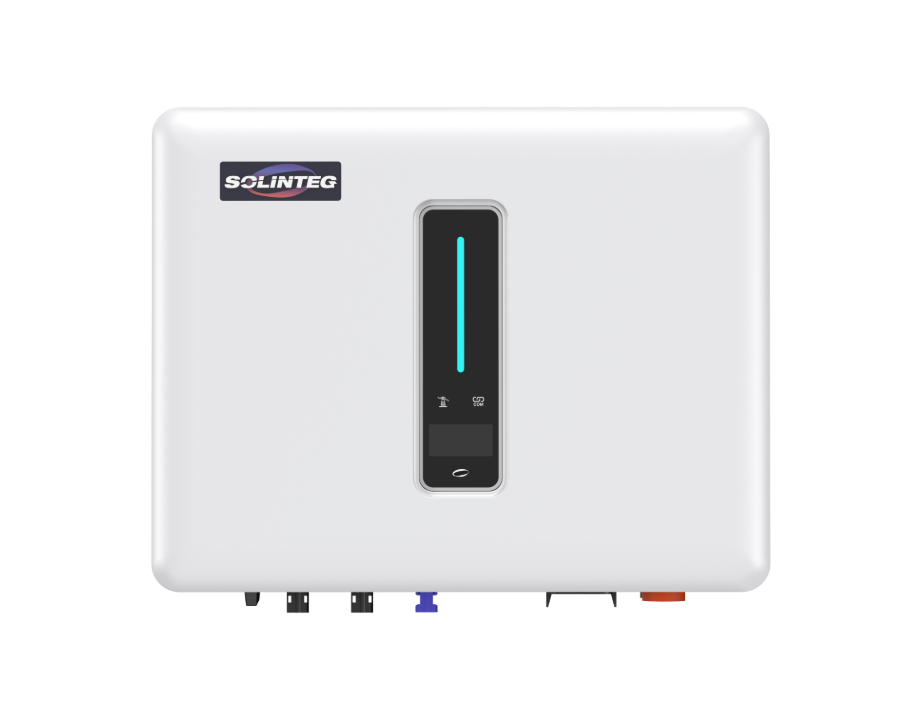
Comparative premise and the engineer’s dilemma
The question that occupies designers and asset owners alike is not merely which inverter is more efficient, but how that choice shapes system behaviour when paired with storage. This comparative insight contrasts central three‑phase inverters with modular alternatives, noting their interaction with a battery storage system and the PV array at large. The purpose is practical: to weigh resilience, commissioning complexity, and long‑term operational cost rather than to indulge in technical parochialism.

Design vectors: central three‑phase versus distributed architectures
Central three‑phase inverters offer consolidated power electronics and simplified interconnection to medium‑voltage or commercial distribution. They score well on footprint and nominal efficiency. Distributed or string‑based topologies provide redundancy and granular MPPT control, which can improve yield under non‑uniform irradiation. Considerations must include inverter harmonics, cooling strategy, and the capacity for grid‑tie control modes such as Volt‑Var or frequency droop.
Integration with battery systems: control and protection
When a three‑phase inverter is paired to storage, the control stack requires clear delineation between the inverter’s grid interface and the battery management system (BMS). Mature BMS integration supports state‑of‑charge limits, cell balancing, and thermal protections; it also enables use cases like peak shaving and arbitrage. The operational profile—measured in kWh throughput and cycle depth—dictates component selection and warranty terms.
Real‑world anchor: lessons from large deployments
Systems such as the Hornsdale Power Reserve in South Australia have shown that properly engineered battery‑inverter pairings can stabilize frequency and reduce ancillary service costs for the grid. That deployment made plain the value of matched control strategies and fast response times; it also illustrated that savings accrue when storage dispatch is informed by both inverter capability and local grid rules. These lessons guide siting decisions and procurement specifications worldwide.
Performance trade‑offs and operational profiles
Comparison must be rooted in measurable metrics: round‑trip efficiency, ramp rate, mean time between failures, and depth‑of‑discharge behavior under realistic daily cycling. A three‑phase inverter that pursues peak efficiency at a narrow operating point may underdeliver in installations with variable PV production. Conversely, designs offering broader MPPT range and adaptive loss minimization can yield better annual energy throughput.

Economics, scalability and commissioning
Capital expenditure intersects with lifecycle O&M. Central systems simplify commissioning at scale but can impose single points of failure. Modular approaches distribute risk but raise the tally of site interconnections and firmware maintenance. Integration of a battery storage for solar power systems requires clear firmware compatibility plans and a staged commissioning protocol to prevent firmware‑level control conflicts during initial energisation.
Common implementation mistakes—and how to avoid them
Teams often under‑specify thermal margins, omit harmonics assessment for local distribution, or assume vendor defaults are optimal for battery cycling. A succinct checklist reduces these errors: document expected daily kWh dispatch, require BMS fault reporting in SCADA, and mandate grid‑support function verification during commissioning. Minor diligence early on prevents protracted downtime later—an observation borne out in utility reports.
Summary of comparative findings
Three‑phase central inverters excel where space, simplified wiring, and high nominal capacity matter. Distributed inverters shine where shading, rooftop complexity, or phased expansion are dominant. Both succeed when the battery storage system and inverter controls are specified together, with clear acceptance tests and defined operational modes.
Advisory: three metrics to decide with confidence
1) Cycle‑aligned cost per kWh: quantify expected cycles per year and compare true delivered kWh cost, not just nameplate cost. 2) Control fidelity: require measurable response time (ms) for frequency/voltage ride‑through and confirm BMS‑to‑inverter command latencies. 3) Serviceability score: evaluate mean time to repair and spare parts lead time for the intended region.
Precision matters. SOLINTEG. Final thought: clarity in specification begets predictability.