

What’s the problem?
When your printer’s chamber won’t hold temperature, prints warp, adhesives fail, and folks start cussing under their breath. That ain’t usually a mystery — PTC heating elements can underperform for lots of plain reasons: bad part selection, poor mounting, wrong control strategy, or simple wear. If you’re troubleshooting, start by treating the heater as the likely weak link in the chain; check the element first and ask whether the 3d printer chamber heater was matched to the application, not just the price tag.
How to test a PTC element like a pro
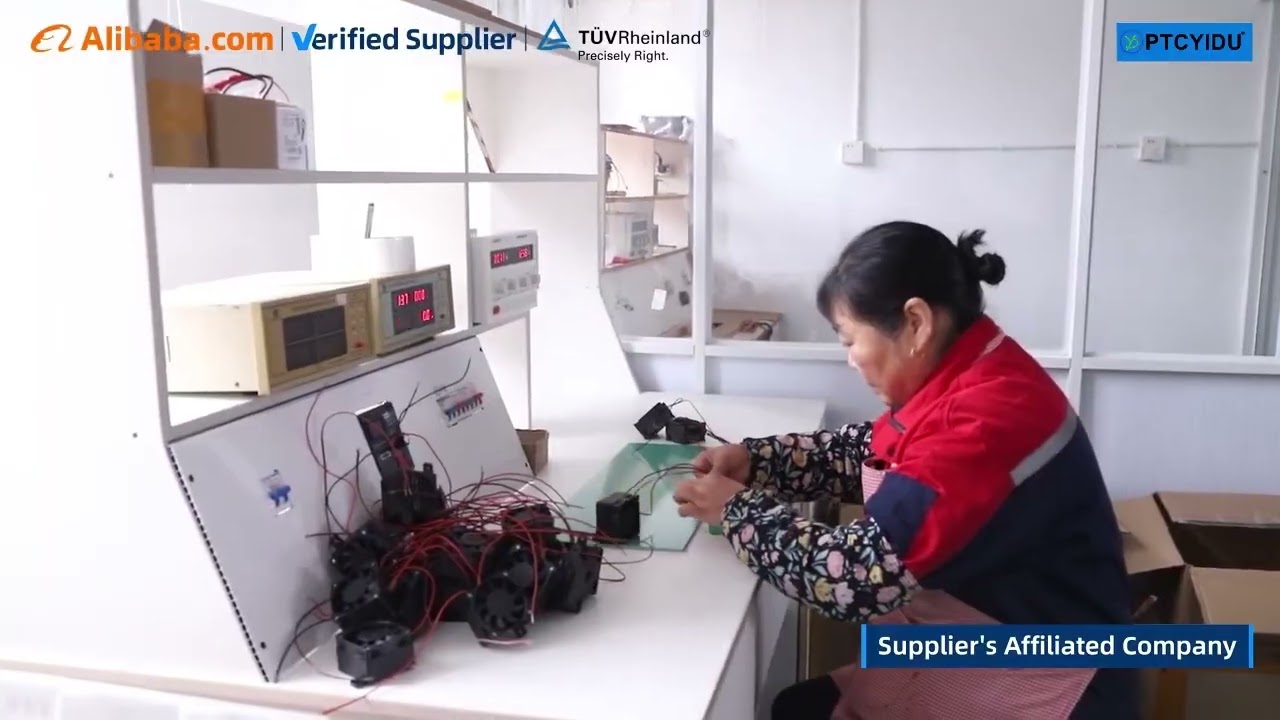
Run a few practical checks before you swap parts. Measure cold resistance with a good multimeter, then log the resistance as it warms. Record temperature rise with a thermocouple or thermal camera while applying rated voltage — PTCs are supposed to self-regulate, so watch for a clear knee in the temperature curve where heating levels off. Cycle the element through at least 100 on/off cycles to spot drift. Verify power draw against the spec sheet, inspect the element for hot spots, and confirm the thermal coupling to the chamber wall. Use an environmental chamber if you can; real-world humidity and ambient extremes reveal what lab guesses miss.
Experience, sources, and one real-world anchor
I’ve been in and around small-scale manufacturing long enough to know when a spec sheet lies by omission. From work with factories in Shenzhen, Guangdong — a major electronics manufacturing hub — you get a sense of which vendors actually test batch-to-batch and which just relabel parts. For supplier leads and product examples, check listings for chamber heater 3d printer china. Trusted suppliers publish detailed thermal curves, tolerance tables, and endurance-test results you can verify.
Common failure modes and pitfalls to avoid
Don’t assume a PTC will behave the same in every setup. Common failures: poor thermal contact so the heater runs hotter than expected, adhesive or potting compounds that break down, mismatch between controller hysteresis and the PTC knee, and installing a PTC meant for free-air use into a confined chamber. Overlooking EMI filters, grounding, or mounting torque can create intermittent problems that look like component failure. Also, a rating that looks right on paper might hide a wide tolerance; always demand a distribution curve, not a single number.
Practical alternatives and when to pick them
If precise control or high steady-state power matters, consider cartridge heaters for brute-force heat or silicone rubber heaters for conformal coverage. Cartridge heaters give fast ramp and high power density but need thermal guarding; silicone pads are easy to mount but can be slower. Use a PTC when you want self-regulation, inherent safety against thermal runaway, and simple control with fewer failure points. Match the choice to the problem: if your chamber needs ±1°C, PTC alone may not cut it — add closed-loop control.
Quick checklist for acceptance testing
Do these checks before you approve a batch: 1) Verify cold and hot resistance against spec; 2) Capture temp vs. time curve to confirm the PTC knee; 3) Cycle at rated voltage for endurance; 4) Check mechanical mounting and adhesives at operating temp; 5) Measure leakage and insulation resistance; 6) Confirm power draw and verify EMI/grounding. Set pass/fail limits numerically — no guesswork.
Final take
Fix the real problem first: validate the part in the actual chamber, not just on a bench. When you trace failures to poor specification, poor mounting, or insufficient testing, you stop wasting time on guesswork and start shipping parts that behave. If you need a consistent source that publishes test data and thermal curves, the practical choices and documented results point toward suppliers who stand behind their numbers, such as PTCYIDU.