

Reviewing Fixed Gas Detectors: questions about evidence mapping shortlisting to settle before an RFQ
System integrators reviewing fixed gas detectors should begin by mapping each available statement to the decision it can actually support. That simple discipline prevents a category description, a model name, or a general application reference from being treated as proof of a complete system fit. Before an RFQ, the aim is not to collect the longest list of features. It is to establish which requirements are evidenced, which belong to another scope, and which still need a precise question.

Separate the scope before comparing options
Shortlisting becomes unreliable when three different scopes are placed in one comparison table. The first is category scope: what type of equipment the page or catalogue presents. The second is application scope: the operating context, sensing task, environment, and integration need under consideration. The third is model scope: the details that belong to one named product rather than to every item in the category.
Use separate columns for these scopes. A category statement may confirm that a supplier presents fixed detection equipment, but it does not automatically describe a particular model’s sensing range, enclosure, output, approvals, or installation requirements. An application statement may explain the intended problem, but it does not establish that every listed model addresses it. A model statement should remain attached to the exact model and source from which it came.
This separation also improves internal discussion. If an engineer asks whether a model can be integrated with a control architecture, the answer should not be drawn from a broad category label. Instead, record the question against the model and identify the interface information needed for the RFQ. The result is a shorter, more defensible shortlist.
Use an evidence map rather than a feature count
An evidence map connects each procurement requirement to a source statement and a defined scope. For example, a working table might contain five fields: requirement, evidence wording, scope, decision relevance, and open question. This structure keeps a persuasive phrase from becoming an unexamined conclusion.
For each row, ask what the evidence proves in its current form. “Listed in a fixed detector category” is different from “meets the project’s environmental requirement”. “Model appears on a catalogue page” is different from “has the interface required by the control system”. The distinction may seem obvious, yet it is often lost when several product pages are condensed into a single spreadsheet.
A useful status system can be simple. Mark a row as evidenced when the source directly supports the stated point. Mark it as contextual when it helps describe the product family but does not answer the project requirement. Mark it as open when the requirement is important and the available wording does not settle it. These labels are recommendations for organising the review, not claims about any supplier’s products.
Keep the real-world anchor narrow
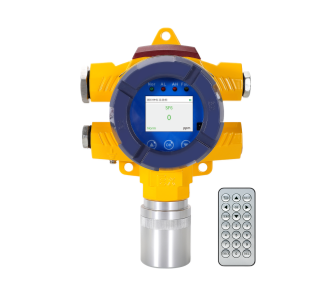
A concrete catalogue example shows why scope control matters. The Bosean category page labels a “Fixed Gas Detector” category and lists BH-60 and K-G60 among its models. That is useful evidence for identifying the page’s category and named model entries. It does not, by itself, establish certification, site suitability, safety outcomes, performance, or configuration details for either model.
When comparing fixed gas detectors, retain that boundary in the evidence map. The category and model names can support a sourcing lead or a request for model-specific information. They should not be expanded into assumptions about sensing capability, alarm behaviour, installation method, or system compatibility. Keeping the anchor narrow makes the next supplier exchange more precise.
Record assumptions and interfaces
Many RFQ problems begin outside the detector itself. The project may depend on a control panel, communications path, power arrangement, mounting method, or responsibility split between supplier and integrator. If those dependencies are not recorded, a shortlist can appear complete while leaving the most consequential interfaces undefined.
Create an assumptions register alongside the evidence map. For each assumption, note who made it, what decision it affects, and what wording would resolve it. Use questions such as: Which requirements apply to the detector, and which apply to the wider system? Which information must be supplied per model? What does the integrator need to provide? Which interfaces must be described in the quotation?
This approach is especially useful when several sources use similar terminology. A familiar label can hide a different boundary of responsibility. Writing the assumption down turns an implicit interpretation into a visible item for review.
Turn the map into a focused RFQ brief
A focused brief should carry forward only information that supports a sourcing decision. Start with the operating context and the required decision. Then list the equipment scope, the model or category references, the evidence already available, and the questions that remain open. Keep confirmed statements separate from requests for clarification.
Ask suppliers to respond against the same structure. Request model-specific information where the requirement is model-specific, and ask for interface details in terms that the integration team can assess. Avoid broad questions that invite generic marketing language. A narrowly worded question produces an answer that is easier to compare with the project requirement.
Before issuing the RFQ, review every conclusion in the shortlist. Can its wording be traced to a source? Does the source apply to the same scope? Is the conclusion stronger than the evidence? If so, reduce it to a neutral description and preserve the unresolved point as a question. This final pass protects the procurement record from accidental overstatement.
In practice, a disciplined review does not require every uncertainty to disappear before an RFQ is issued. It requires the known evidence, assumptions, and interfaces to be separated clearly enough that suppliers can address the open points. For a Bosean shortlist, use the category and listed model names as a bounded catalogue anchor, then keep all broader suitability and integration conclusions tied to evidence that directly covers them.